
Four lens edgers
A 3D patternless edger that bevels and grooves, an automatic edger with its own scanner, an automatic edging machine that works from templates, and a bench hand edger.
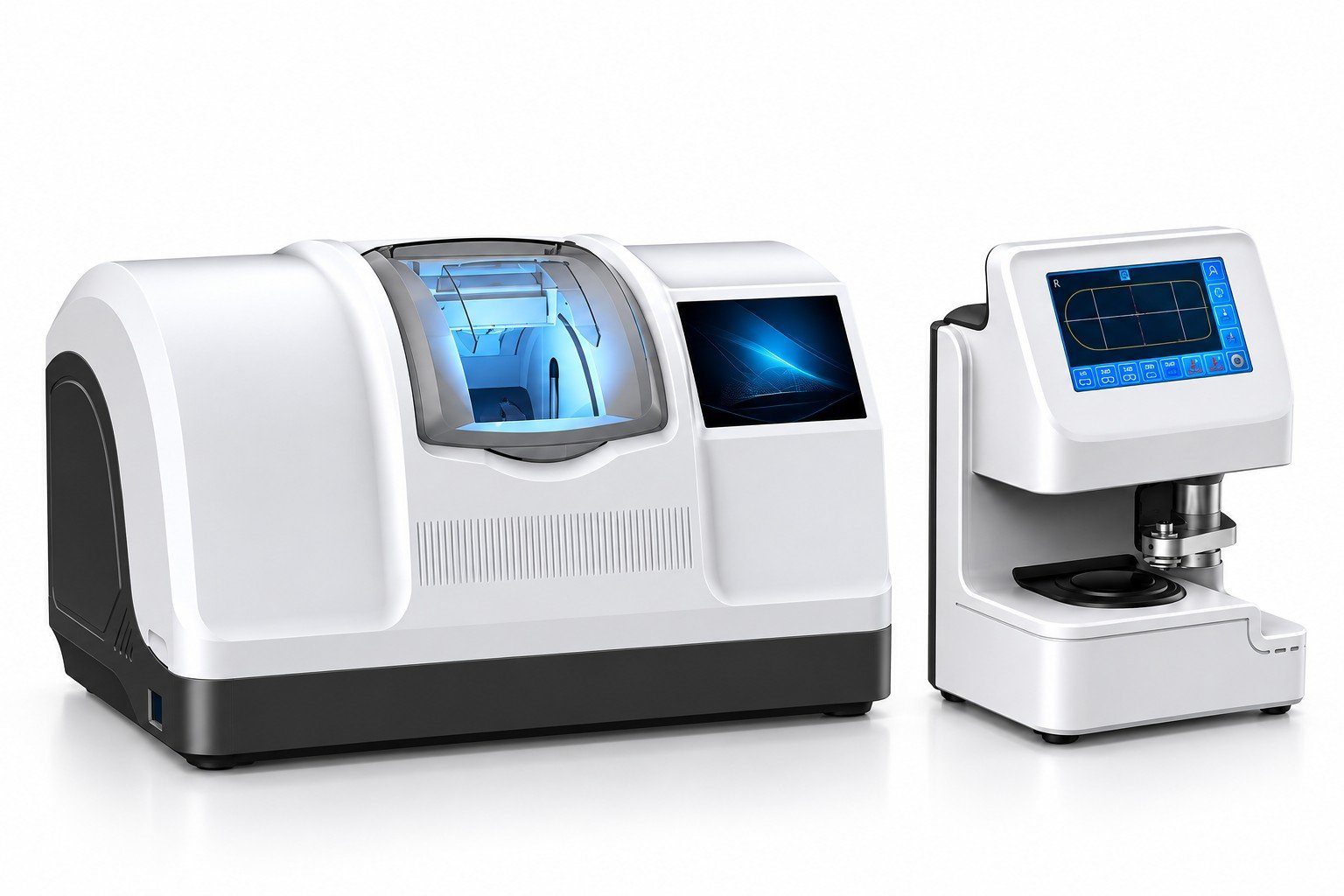
SJG-1000AK
3D patternless edger with automatic grooving, 0.5 s scanner.- Shape capture
- 0.5 s optical scan
- Edges
- Bevel, groove, polish
- Lens size
- 22–80 mm
- Weight
- 60 kg + 5 kg scanner
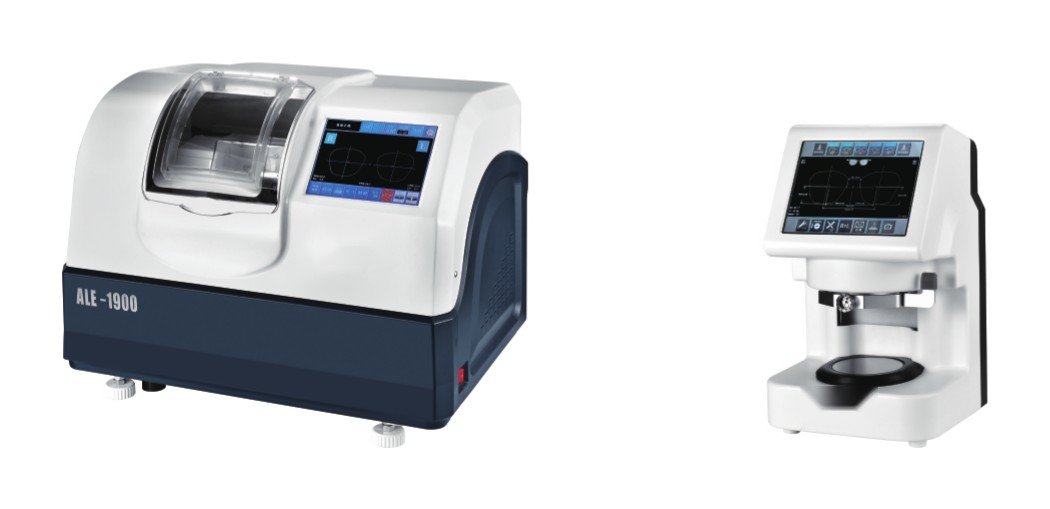
ALE-1900
Automatic lens edger with scanner, 8" LCD, servo motor.- Scanner screen
- 8" LCD
- Wheel motor
- Servo
- Power
- 750 W
- Weight
- 40 kg + 9 kg scanner
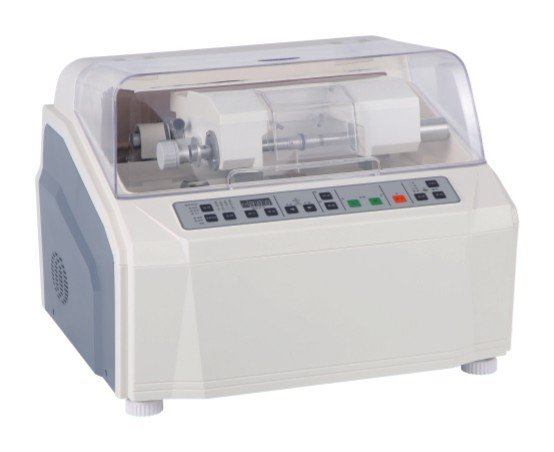
AE-688P / 688V
Lens edging machine for PC, resin and glass, AC 100–240 V.- Lens materials
- PC, resin, glass
- Grinding wheel
- Φ100 mm
- Power
- 500 W
- Weight
- 43 kg
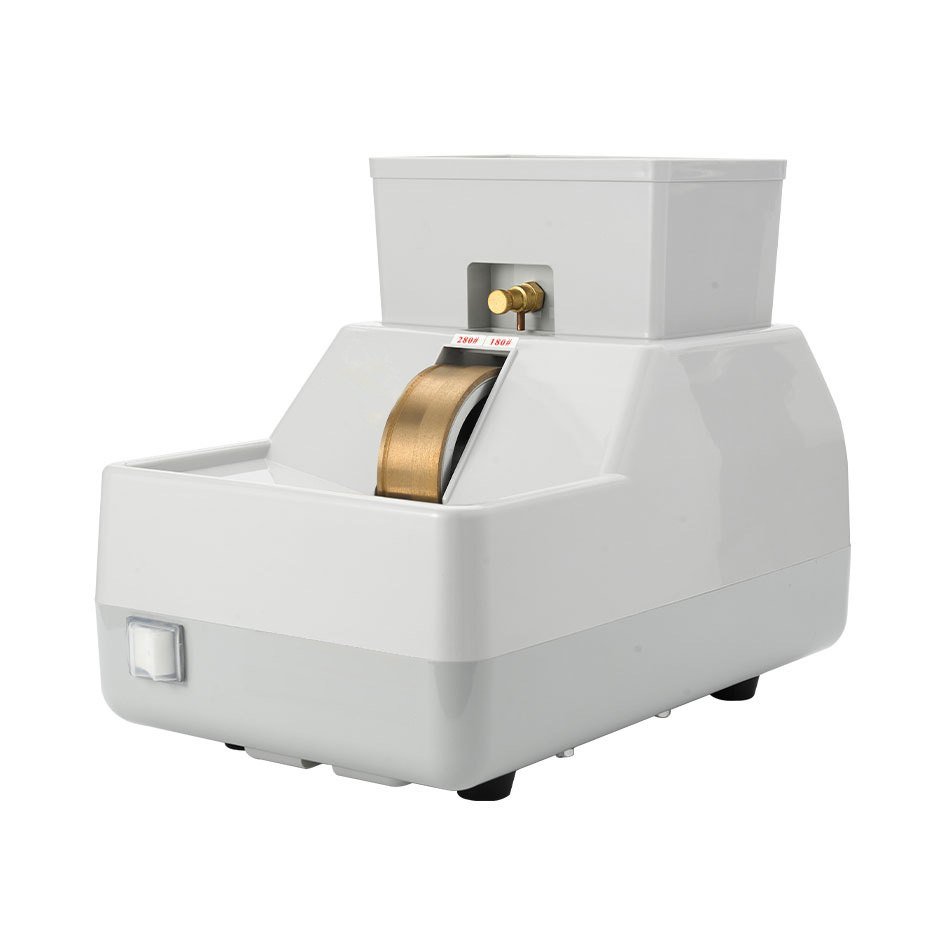
CP-7A-35WV
Hand edger, V-groove diamond wheel, dual support, 100 W.- Wheel
- Diamond, 180/280 grit + V-groove
- Lens materials
- Resin, glass, PC
- Power
- 100 W, 4,200 rpm
- Weight
- approx. 6.4 kg
Compare the lens edgers
Blank cells: confirmed on your quotation.
| Specification | SJG-1000AK | ALE-1900 | AE-688P / 688V | CP-7A-35WV |
|---|---|---|---|---|
| Edging | 3D patternless, optical scanner | Automatic, separate scanner | Automatic, template | Manual |
| Grinding wheel | Ø90 mm | Φ100 mm, approx. 5,000 rpm rough grinding | Φ100 mm | Diamond 14 × 100 × 35 mm: 180-grit coarse, 280-grit fine with V-groove; 4,200 rpm |
| Grinding diameter range | Φ22–80 mm | Φ20–80 mm | Φ18–80 mm | |
| Lens materials | Resin, high-index, PC | PC, resin, glass | Resin, glass, PC | |
| Edge profiles | Bevel, groove, polished bevel, polished flat | Bevel, polished bevel, polished flat | Bevel | Hand touch-up, safety bevel, V-groove |
| Voltage | AC 220 V / 110 V, 50/60 Hz | AC 220 V / 50 Hz, 110 V / 60 Hz | AC 100–240 V, 50/60 Hz | AC 220 V / 50 Hz, 110 V / 60 Hz |
| Power | 550 W (scanner 60 W) | 750 W (scanner 80 W) | 500 W | 100 W |
| Dimensions | 680 × 460 × 450 mm; scanner 230 × 370 × 200 mm | 600 × 460 × 470 mm | 540 × 480 × 380 mm | 350 × 215 × 260 mm |
| Weight | 60 kg, scanner 5 kg | 40 kg, scanner 9 kg | 43 kg | approx. 6.4 kg |
| Suits | Semi-rimless work without a separate groover | Shops edging every day | Shops moving up from hand edging | Touch-ups and low volume |
Three questions before you pick an edger
How many jobs do you edge a day?
A few a week can stay on a hand edger. Daily volume is where an automatic edger pays back its bench space. Compare your monthly outside-lab bill with the cost of edging in-house.
Which lens materials do you stock?
Check PC, resin and glass against each model before you order. Polycarbonate needs its own handling, and glass needs a glass wheel. Ask us about wheel sets.
Do you also drill rimless or groove semi-rimless?
The SJG-1000AK grooves on the edger itself. With the other models, add a groover and a drilling machine from Lens Finishing, or start from a lab package.
What a lens edger does
Where the edger sits
An edger cuts an uncut lens blank to the shape of the frame opening, while keeping the optical center where the prescription needs it. A modern edging system combines three jobs: reading the frame or lens shape, centering and blocking the lens, and grinding.
The usual finishing sequence runs: verify and mark the lens, block, edge (rough and finish), bevel or groove, drill for rimless, polish, mount and inspect.
Patternless, scanner, template or hand
The SJG-1000AK captures the frame shape optically, so no pattern is needed, and bevels, grooves and polishes on one machine. The ALE-1900 scans the lens and guides centering on its own screen. The AE-688 edges to a template held in an aluminum clamp. The CP-7A-35WV is a hand edger: you hold the lens against a diamond wheel with coarse, fine and V-groove zones. Most labs with an automatic edger still keep a hand edger for touch-ups and safety bevels.
Plan the bench
- Power: trade guides recommend a dedicated circuit for an edger and no extension cords.
- Water: plumbed supply with a drain is cleaner; a recirculating tank works but needs regular changes.
- Space: about 10 linear feet (3 m) of counter holds a lensmeter, blocker, edger and hand edger.
- Ventilation: high-index lenses smell strongly when cut, so an air handler helps.
Materials in brief
- CR-39: easy to edge with steady water.
- Polycarbonate: sharp wheels, little or no water while roughing, and clean swarf out between lenses.
- Glass: a dedicated glass wheel, and clean the chamber before going back to plastic.
- Coated lenses: slippery; use suitable pads and lower clamping pressure to avoid axis slip.
Background sources: Edger basics (20/20 Magazine) · Eliminating lens edge fractures (The Optical Journal) · Setting up your new in-office lab (Review of Optometry)
Lens edger questions
What is the difference between an automatic and a hand edger?
An automatic edger grinds the lens to the frame shape by itself, with repeatable size and bevel. A hand edger is a bench grinder where the operator holds the lens; it is used for touch-ups, safety bevels and low volume.
Which edger is patternless?
The SJG-1000AK. Its optical scanner captures the shape in 0.5 seconds and centers the lens in the same step, so no pattern is made or stored.
Which edger grooves semi-rimless lenses?
The SJG-1000AK bevels and grooves automatically. With the ALE-1900 or AE-688, groove on a separate CP-3-800 groover.
Does the ALE-1900 need a template to edge a lens?
The ALE-1900 works with its own scanner, which images the lens and guides centering. The AE-688 is the model that edges to a template.
Which consumables should I order with an edger?
Blocking pads and suction cups that fit the chuck, and spare wheels if you edge glass. See Tools & Spare Parts.
Which voltage do the edgers use?
The SJG-1000AK, ALE-1900 and CP-7A-35WV come in AC 220 V and 110 V versions; the AE-688 runs on AC 100–240 V. We confirm the version and plug on the quotation.