
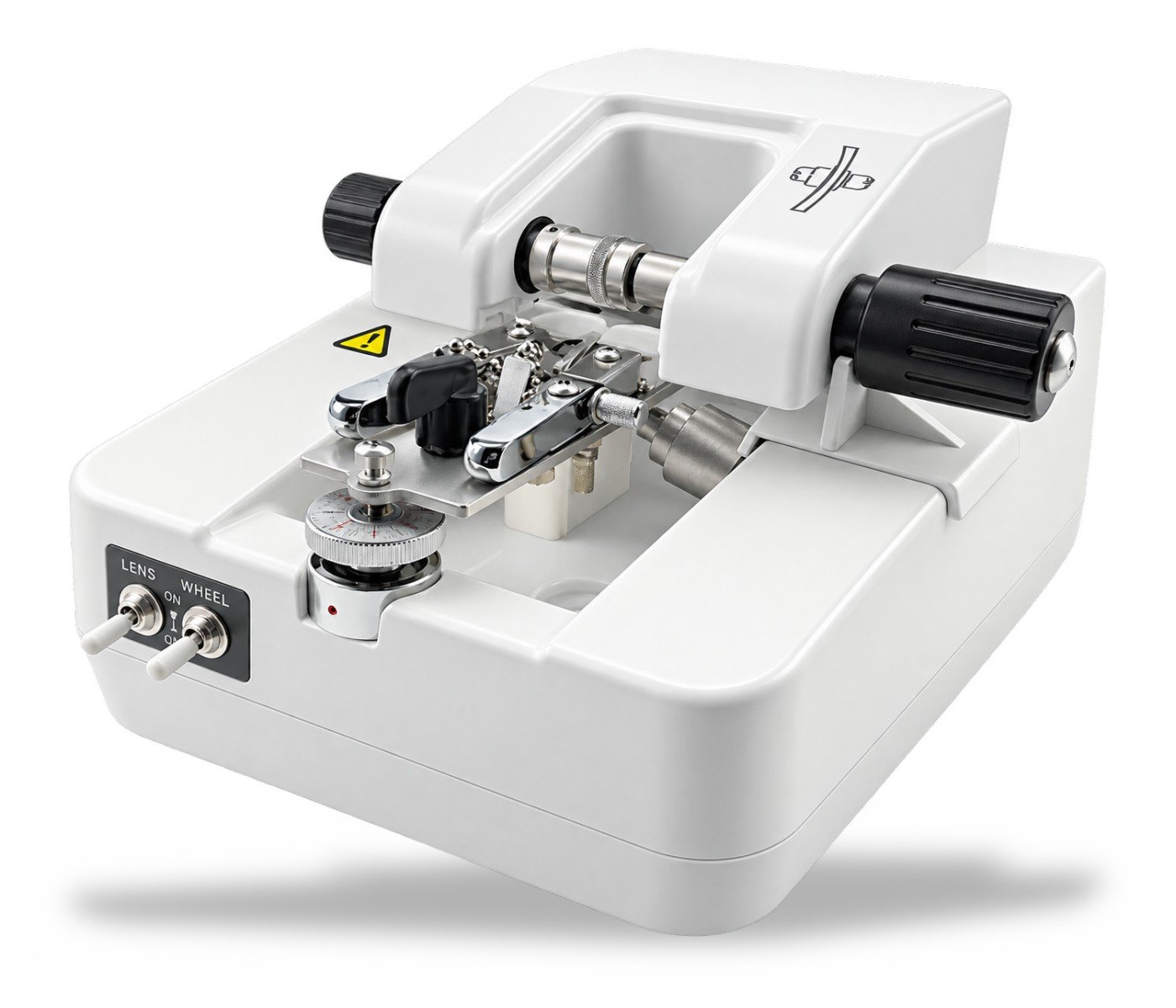
CP-3-800 Lens groover for semi-rimless frames
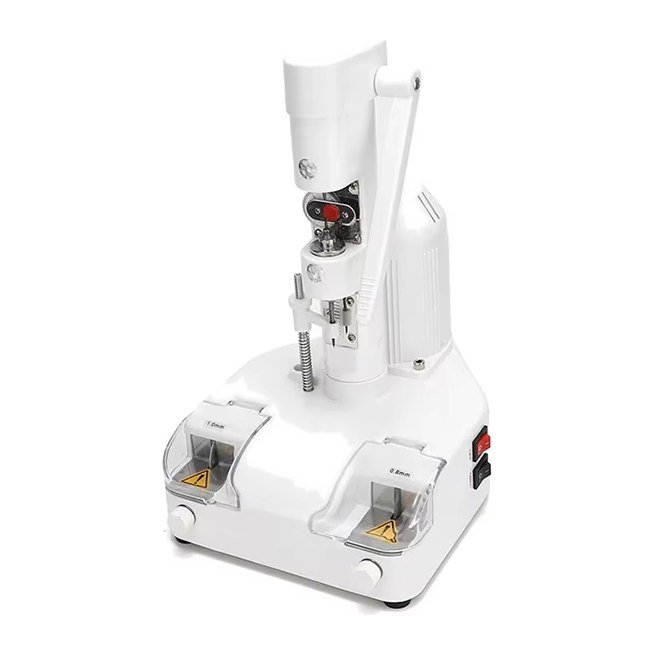
A bench groover that cuts the groove for nylon-cord semi-rimless frames in about 30 seconds. The CP-3-800 is the top configuration of the CP-3 series, with a stainless steel panel, a large guide wheel and an all-stainless-steel clamp shaft.
Delivery, packing and documents
What the CP-3-800 does
Semi-rimless grooves
Cuts a 0.6 mm groove around the lens edge for the nylon cord that holds a semi-rimless lens.
Adjustable depth
Seven depth settings (0–7) to suit the cord and the lens.
Wide lens range
Lenses 28–60 mm in diameter and 1.5–11.0 mm thick.
Stainless steel panel
A stainless steel panel that wipes clean.
Guide wheels and diamond cutter
Two guide wheels keep the lens on track while a diamond cutting wheel cuts the groove. LENS and WHEEL switches run the lens and the cutter separately.
Stainless clamp shaft
An all-stainless-steel clamp shaft, the feature that sets the CP-3-800 apart in the series.
A closer look at the CP-3-800
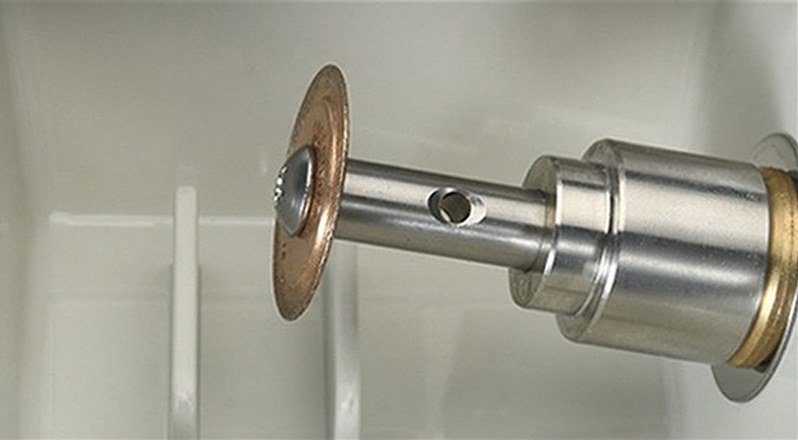
Diamond cutter
A diamond cutting wheel on a steel spindle, built to last.
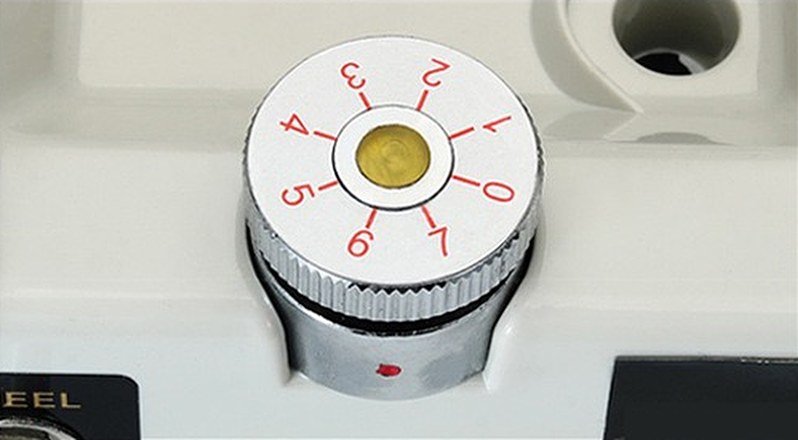
Depth adjustment
Set the groove depth by hand on the dial, from 0 to 7.
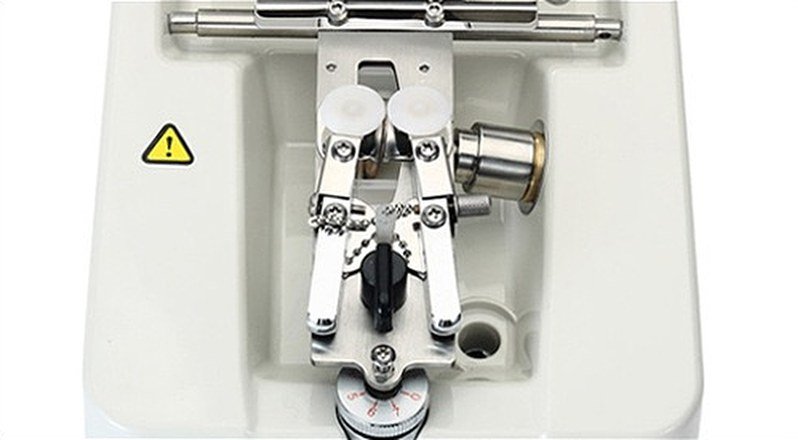
Left–right adjustment
Move the lens carriage left or right to place the groove precisely on the edge.
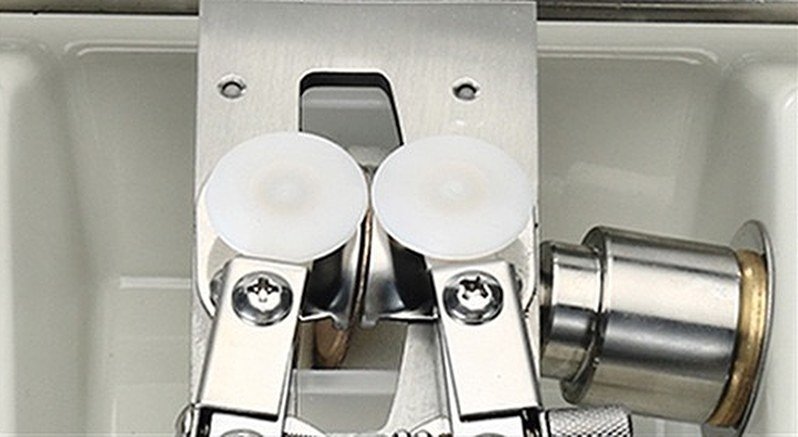
Guide wheels
Two guide wheels ride on the lens so the groove stays on track.
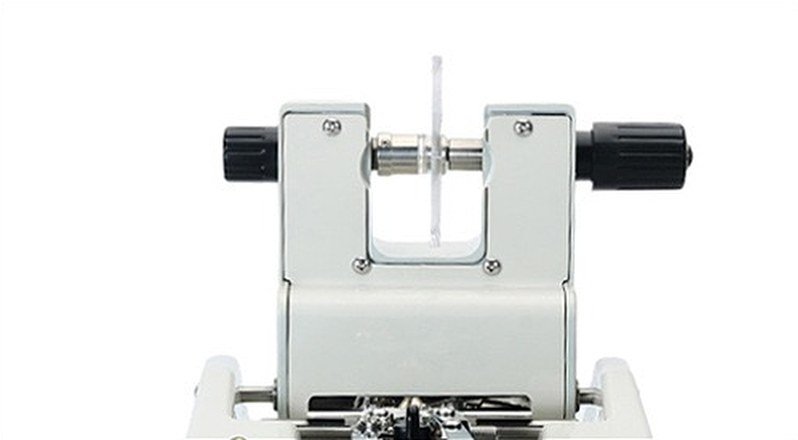
Metal lens clamp
A metal clamp holds the lens firmly, so it does not slip while grooving.
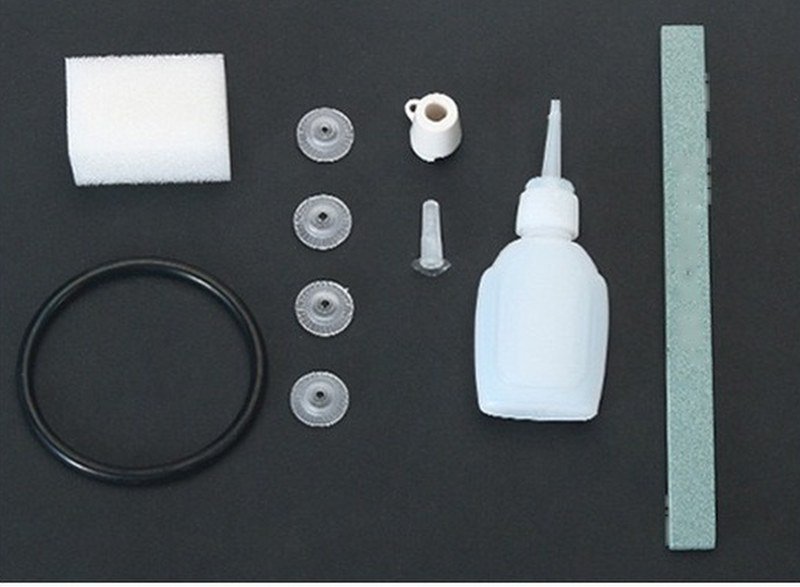
Accessories
Supplied with a sponge, a spare belt, lens pads, an oil bottle and a 180-grit dressing stone.
CP-3-800 in figures
Published specifications. Anything not listed here is confirmed in writing on your quotation, never estimated.
One parameter table covers the CP-3 series. The versions differ in panel and fittings, as below.
CP-3 series
- Grooving time
- approx. 30 s
- Groove width
- 0.6 mm
- Groove depth
- 0–7 adjustable settings
- Compatible lenses
- Resin, glass
- Lens diameter
- 28–60 mm
- Lens thickness
- 1.5–11.0 mm
- Voltage
- AC 220 V / 50 Hz, 110 V / 60 Hz
- Power
- 30 W
- Net weight
- approx. 2.2 kg
- Product dimensions
- 170 × 210 × 150 mm
- Packaging
- 275 × 235 × 215 mm
- Packaging weight
- 2.6 kg
Versions
| Model | Difference |
|---|---|
| CP-3-800 | Stainless steel panel, large guide wheel, all-stainless-steel clamp shaft |
| CP-3PCG | Stainless steel panel, large guide wheel |
| CP-3CR | Stainless steel panel |
| CP-3T | Iron plate |
Grooving semi-rimless lenses
How it works
In a semi-rimless frame the lens hangs from a partial rim, and a thin nylon cord seated in a groove around the lens edge holds the rest. The groove is cut after the lens is edged to a flat edge, and before polishing and mounting.
On a standalone groover the lens is clamped at its center and turns between guide wheels while a small cutter cuts the groove. A dial sets the depth. Groove position matters: centered between front and back on plus and thin lenses, and closer to the front on thick minus lenses, but no closer than about 1 mm to the front surface.
Nylon cord is typically 0.5–0.7 mm thick, and trade guides suggest a groove about 0.6 mm wide with roughly 0.9 mm of wall left on each side, on an edge about 2.2–2.5 mm thick.
Check before you order
- Groove width against the cord your frames use (0.6 mm on the CP-3 series).
- Depth range and how finely you can set it (0–7 settings here).
- Lens diameter (28–60 mm) and thickness (1.5–11.0 mm) against your typical jobs.
- Build: panel and clamp shaft material; the CP-3-800 is all stainless.
- Replacement cutter wheels.
Good practice
- Edge the lens flat, leaving enough edge thickness (about 2.2–2.5 mm).
- Set the depth and the groove position for the lens: centered, or toward the front on thick minus lenses.
- Groove polycarbonate in two or three passes so the cutter does not melt the edge.
- Polish the edge if the lens edge will show.
- Fit the cord and check that the lens sits evenly in the frame.
Care and maintenance
- Keep the cutter cool and clean; clear polycarbonate build-up with a small wire brush.
- Wipe the panel and clamp shaft after use.
- Replace the cutter wheel when grooves turn rough or chip.
Background sources: Eight tips for processing rimless or semi-rimless eyewear (Eyecare Business) · Twenty essential troubleshooting tips for opticians (Review of Optometry) · Edging poly: a troubleshooting guide (Eyecare Business)
Often ordered with the CP-3-800
CP-3-800 questions
How deep should the groove be?
Groovers typically cut from zero to about 0.7 mm, and about 0.5 mm is a common target. On the CP-3-800 you set the depth with seven settings.
Where should the groove sit on a thick minus lens?
Toward the front surface, so the lens looks thinner in the frame, but no closer than about 1 mm to the front.
Can I groove glass lenses?
Resin and glass are listed. Note that grooved glass generally cannot be heat-treated and will not pass drop-ball impact testing, so check the impact rules in your market before grooving glass.
Which version of the CP-3 should I choose?
All four share one parameter table. The CP-3-800 has the full stainless build with a large guide wheel; the CP-3T has an iron plate and is the simplest version.