
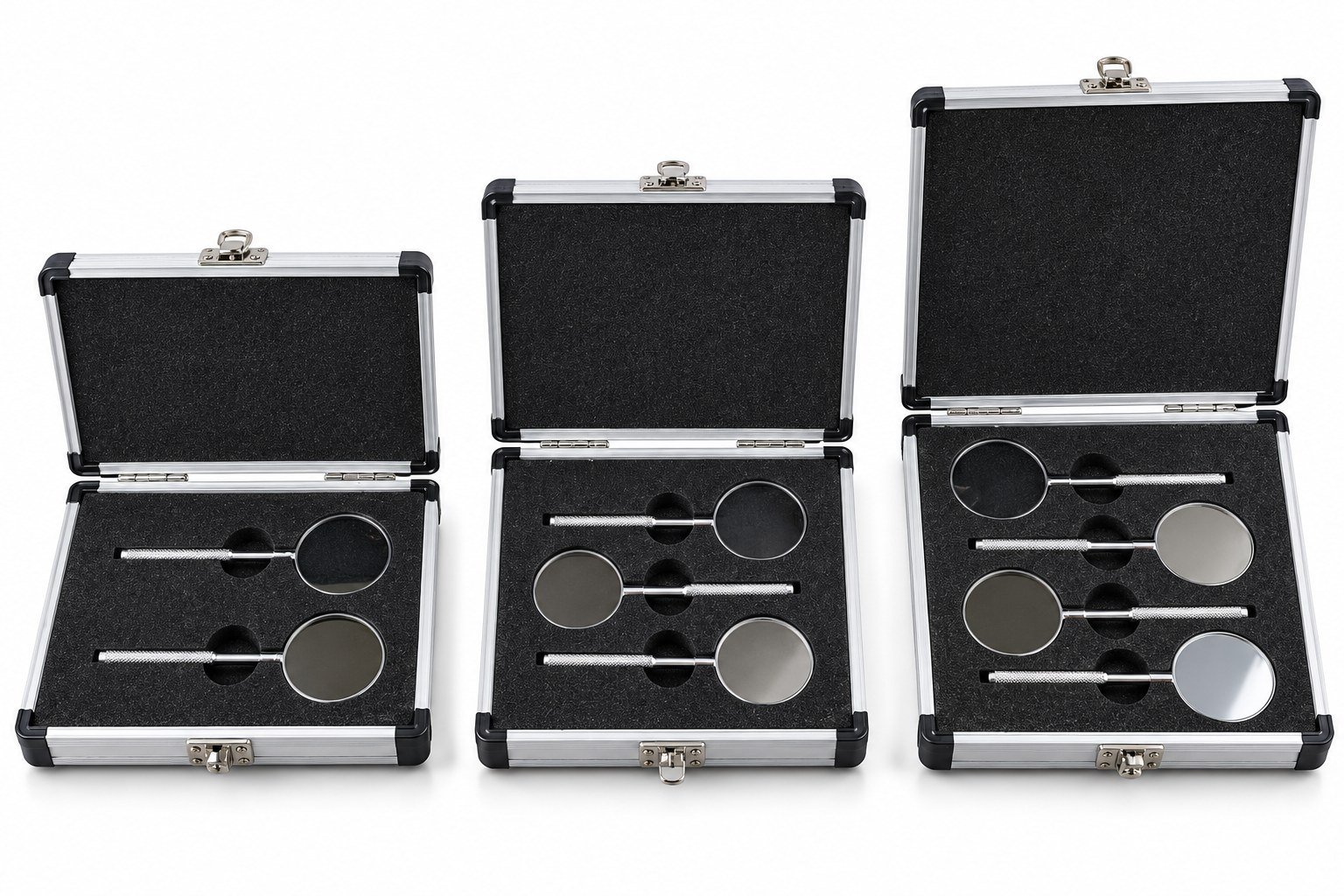
CC-02 / CC-03 / CC-04 Jackson cross cylinder sets
Hand-held Jackson cross cylinders in foam-lined aluminum cases: two in the CC-02, three in the CC-03 and four in the CC-04, with powers from ±0.25 D to ±1.00 D. Use them with a trial frame to refine cylinder axis and power.
Delivery, packing and documents
What the CC sets offer
Three sizes of set
CC-02 with two cross cylinders, CC-03 with three and CC-04 with four.
±0.25 to ±1.00 D
Cross cylinder powers from ±0.25 D to ±1.00 D across the range.
Hand-held
Each lens is mounted on a metal handle, to flip in front of a trial frame.
Protective case
A foam-lined aluminum case with a clasp keeps each lens in its own cut-out.
A closer look at the CC-02/03/04
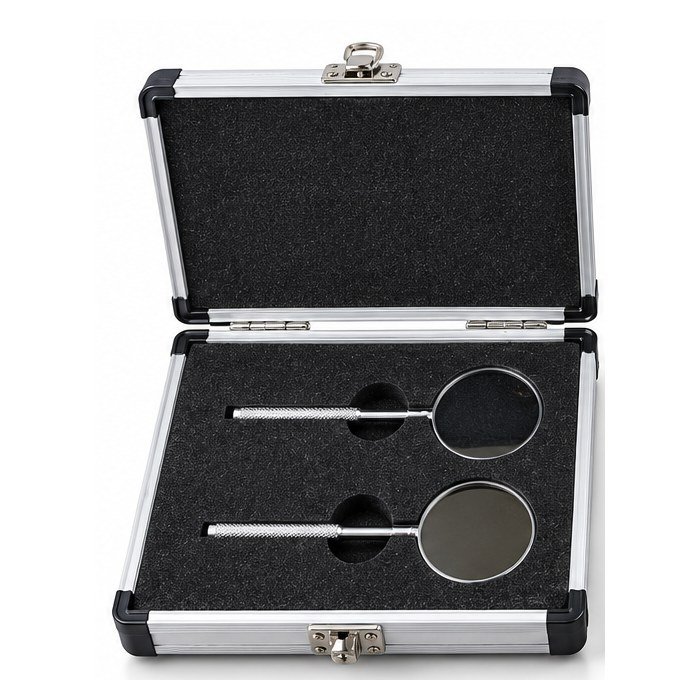
CC-02
Two hand-held cross cylinders in a foam-lined aluminum case.
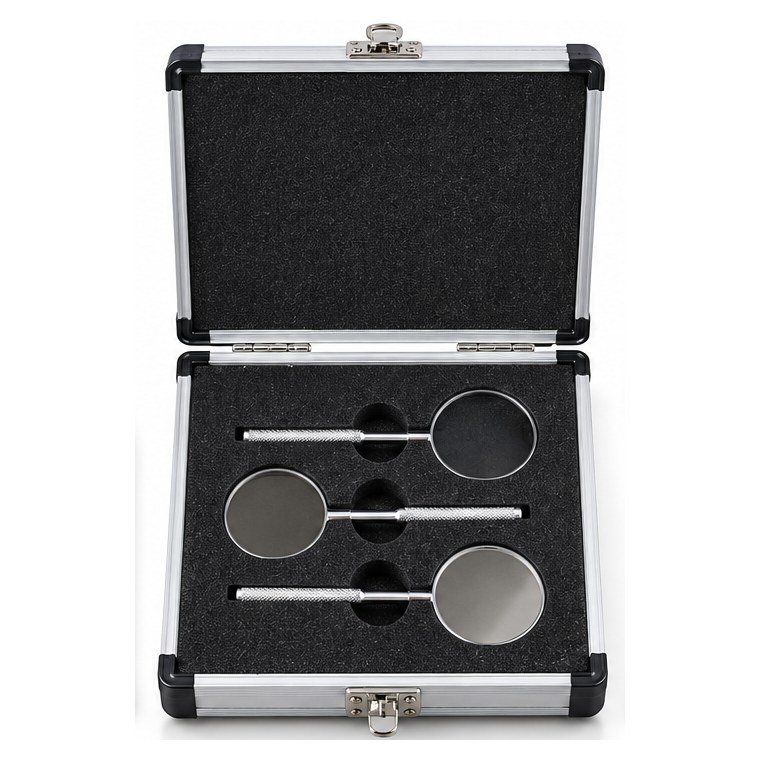
CC-03
Three cross cylinders, for more than one power step.
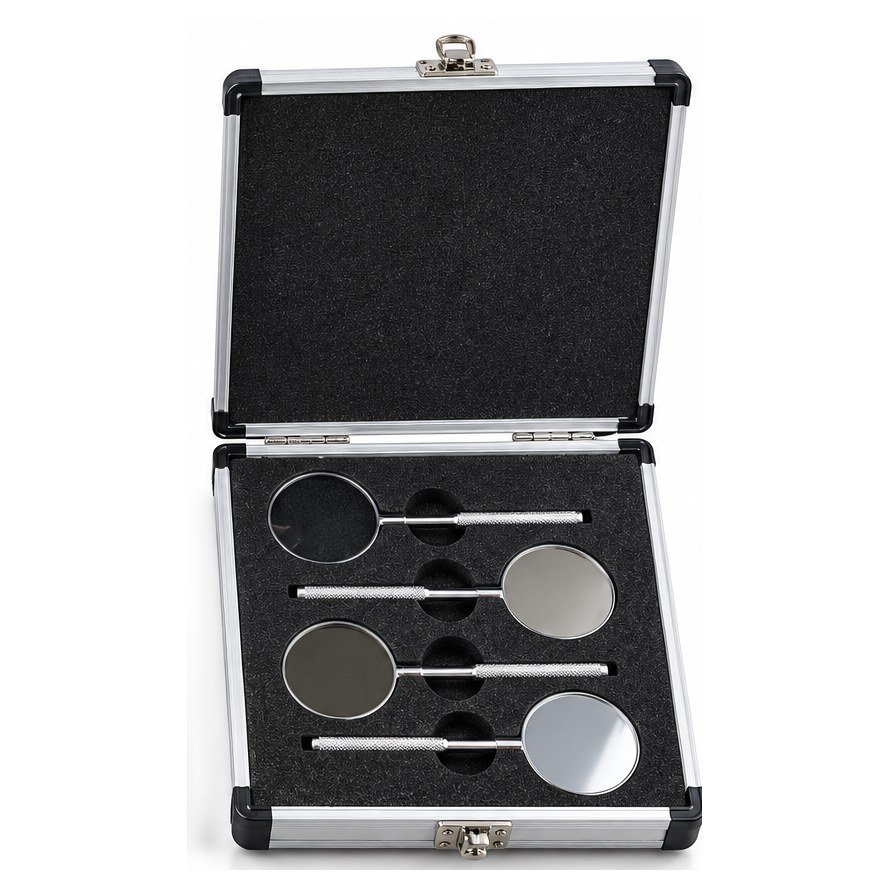
CC-04
Four cross cylinders, covering the range up to ±1.00 D.
CC-02/03/04 in figures
Published specifications. Anything not listed here is confirmed in writing on your quotation, never estimated.
The power of each cross cylinder in a set is confirmed in writing on your quotation.
CC-02 / CC-03 / CC-04
- Models
- CC-02, CC-03, CC-04
- Power range
- ±0.25 D to ±1.00 D
- Cross cylinders per case
- CC-02: 2; CC-03: 3; CC-04: 4
- Mounting
- Metal handle
- Case
- Aluminum, foam-lined
Versions
| Model | Difference |
|---|---|
| CC-02 | Two cross cylinders |
| CC-03 | Three cross cylinders |
| CC-04 | Four cross cylinders |
Using a Jackson cross cylinder
How it works
A Jackson cross cylinder combines two cylinders of equal and opposite power at right angles, on a handle. Flipping it in front of the eye gives the patient two choices, which is how you refine the cylinder axis and then the cylinder power without retinoscopy.
Low powers such as ±0.25 D suit patients with good acuity; higher powers make the difference easier to see when acuity is reduced.
For every 0.50 D you change the cylinder, change the sphere by 0.25 D the other way, to keep the spherical equivalent and the circle of least confusion on the retina.
Check before you order
- The powers in the set against the patients you see.
- That the handle and lens are clear of the trial frame when you flip it.
- A case that keeps each lens apart.
Good practice
- Refine the axis first, with the handle in line with the cylinder axis.
- Then refine the power, with one cross cylinder axis on the cylinder axis.
- Rebalance the sphere after each 0.50 D change in cylinder.
- Use a higher-power cross cylinder when acuity is reduced.
Care and maintenance
- Hold the cross cylinder by its handle, not the lens.
- Clean the lenses with a soft lens cloth, and store them in the case.
Background sources: Jackson cross cylinder (StatPearls, NCBI Bookshelf) · Trial frame refraction: more than just “1 or 2?” (Cybersight, Orbis)
Often ordered with the CC-02/03/04
CC-02/03/04 questions
Which set should I choose?
The CC-02 gives two powers for everyday refraction; the CC-03 and CC-04 add higher powers, up to ±1.00 D, for patients with reduced acuity.
What is a Jackson cross cylinder used for?
To refine the cylinder axis and power during subjective refraction, by asking the patient to compare two flipped positions.
Do the 266-lens trial sets include a cross cylinder?
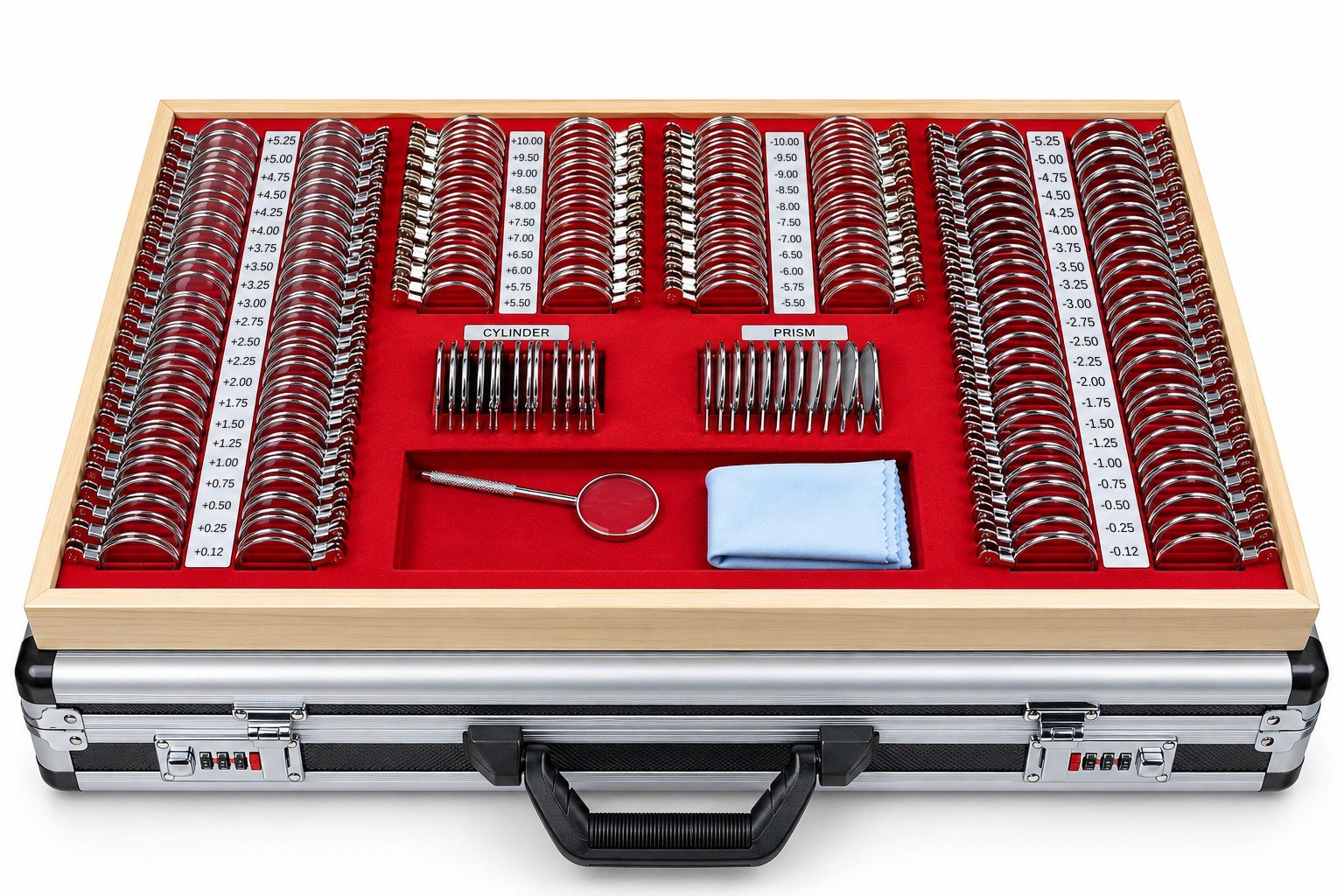
Yes, one. The CC sets add hand-held cross cylinders in more powers.
Why change the sphere when I change the cylinder?
To keep the spherical equivalent: 0.25 D of sphere for every 0.50 D of cylinder, in the opposite direction.