
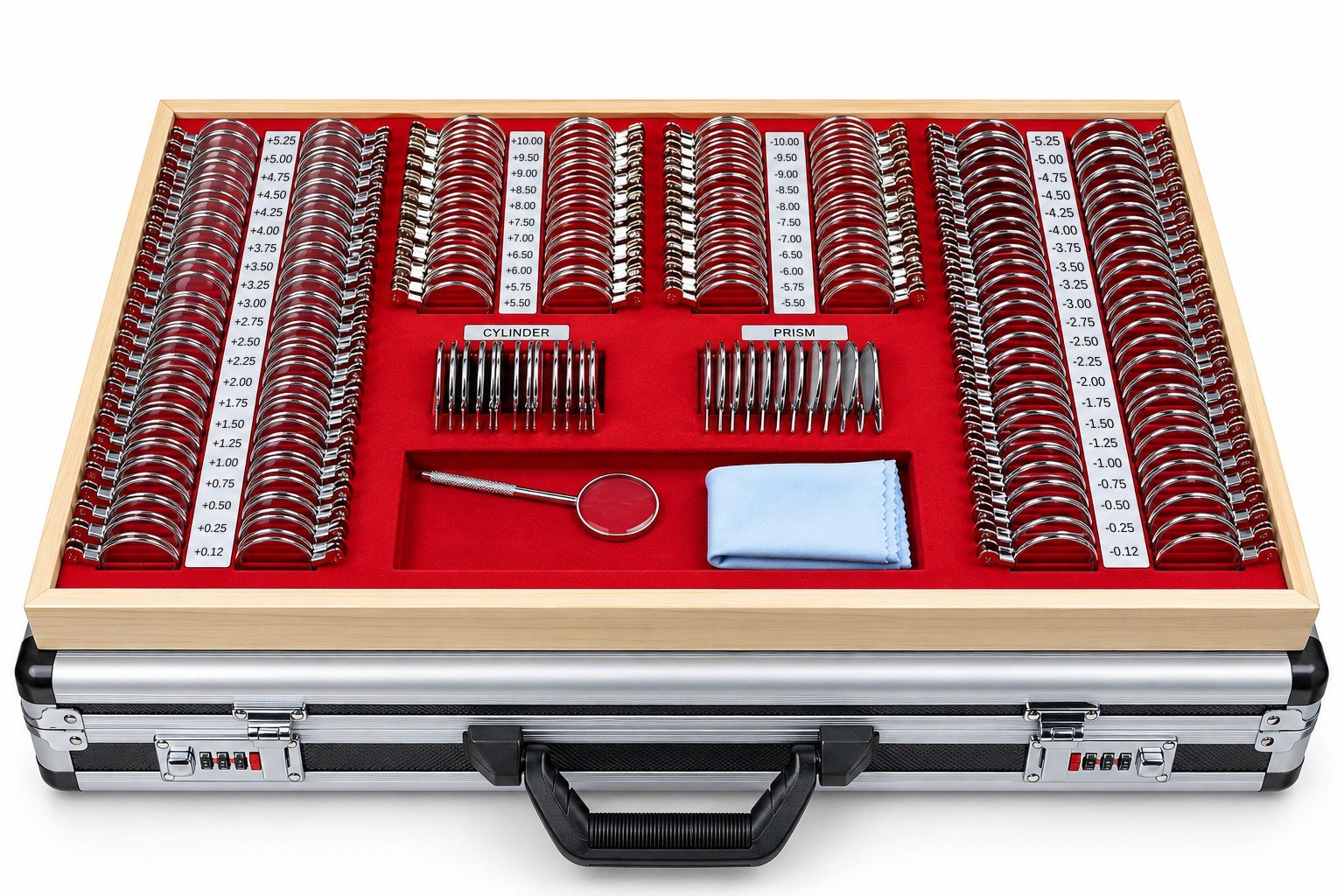
TLC-266M1 Optical trial lens set, 266 lenses
A 266-piece optical trial lens set for subjective refraction: plus and minus spheres from 0.12 to 20.00 D, plus and minus cylinders from 0.12 to 6.00 D, prisms from 0.5 to 8 Δ, and auxiliary lenses including a ±0.25 D cross cylinder. Optical glass in Ø38 mm metal rims with a 36 mm clear aperture, in a hard case with two combination locks.
Delivery, packing and documents
What is in the TLC-266M1
Spheres to ±20 D
Plus and minus spheres from 0.12 to 20.00 D: 0.25 D steps up to 6.00 D, 0.50 D steps up to 10.00 D, then 11, 12, 13, 14, 16, 18 and 20 D.
Cylinders to ±6 D
Plus and minus cylinders from 0.12 to 6.00 D, in 0.25 D steps up to 4.00 D, then 4.50, 5.00 and 6.00 D.
Prisms 0.5 to 8 Δ
Prism lenses of 0.5, 1, 2, 3, 4, 5, 6, 7 and 8 prism diopters.
Auxiliary lenses
Occluder, pinholes, stenopaeic slits, red and green filters, red and white Maddox rods, plano, frosted and cross-line lenses, and a ±0.25 D cross cylinder.
Metal-rim glass lenses
Optical glass with high light transmission that is easy to clean, in Ø38 mm metal rims with a 36 mm clear aperture.
A slot for every lens
Widened slots make each lens easy to pick out and keep it protected; the hard case closes with two combination locks.
A closer look at the TLC-266M1
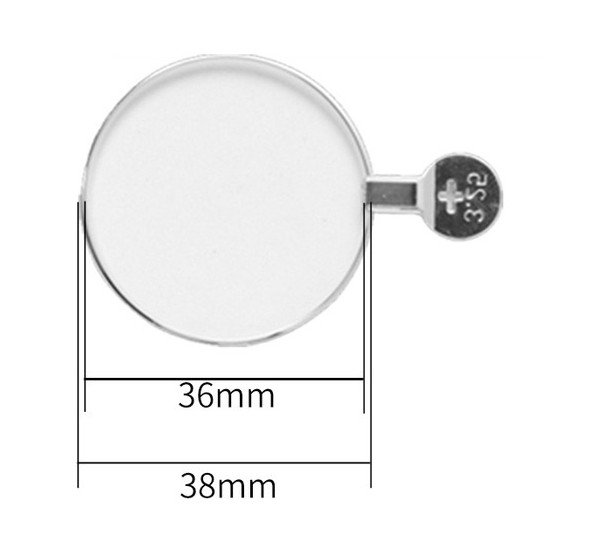
Ø38 mm metal rims
Optical glass lenses in metal rims, 38 mm across with a 36 mm clear aperture and a handle tab.
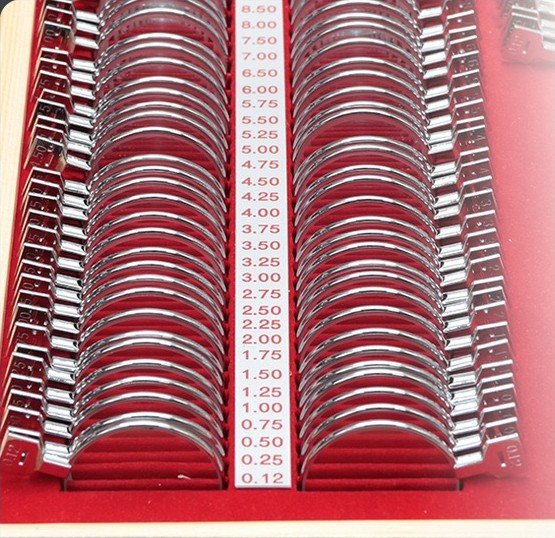
Widened slots
Every lens has its own widened slot next to a power label, so it is quick to pick out and protected from its neighbors.
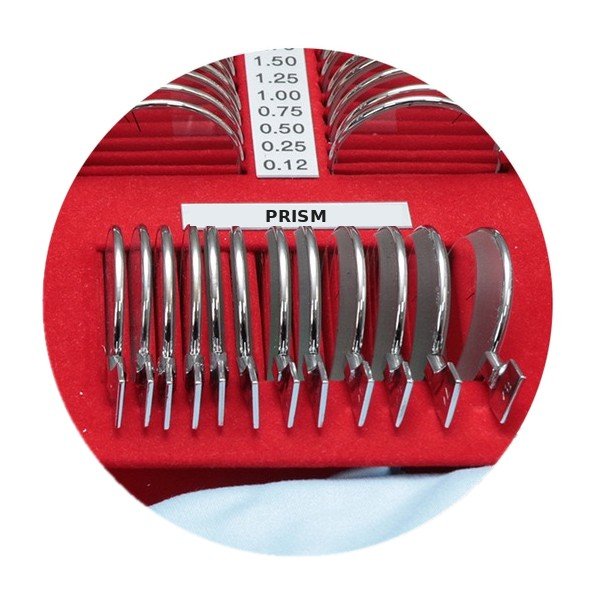
Prisms from 0.5 to 8 Δ
Nine prism powers in their own labeled row: 0.5, 1, 2, 3, 4, 5, 6, 7 and 8 prism diopters.
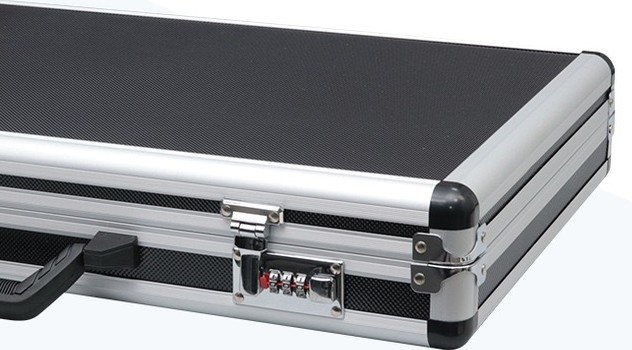
Combination-lock case
A hard case with two combination locks, 560 × 340 × 90 mm, 6.1 kg with the lenses.
TLC-266M1 in figures
Published specifications. Anything not listed here is confirmed in writing on your quotation, never estimated.
The full piece list, lens by lens, is confirmed in writing on your quotation.
TLC-266M1
- Lenses
- 266 pieces
- Sphere range
- ±0.12 to ±20.00 D
- Cylinder range
- ±0.12 to ±6.00 D
- Prisms
- 0.5 to 8 Δ
- Lens size
- Ø38 mm outer, Ø36 mm clear aperture
- Rims
- Metal
- Lens material
- Optical glass
- Case
- Hard case with two combination locks
- Case dimensions
- 560 × 340 × 90 mm
- Weight
- 6.1 kg
Lens powers
- Spheres, plus and minus
- 0.12; 0.25 to 6.00 D in 0.25 D steps; 6.50 to 10.00 D in 0.50 D steps; 11, 12, 13, 14, 16, 18, 20 D
- Cylinders, plus and minus
- 0.12; 0.25 to 4.00 D in 0.25 D steps; 4.50, 5.00, 6.00 D
- Prisms
- 0.5, 1 and 2 Δ (two of each); 3, 4, 5, 6, 7 and 8 Δ (one of each)
Auxiliary lenses
- Occluder (B1)
- 1
- Pinhole (PH 1.5)
- 2
- Stenopaeic slit (SS 1.5)
- 2
- Green filter (GF)
- 1
- Red filter (RF)
- 1
- Red Maddox rod (MR)
- 1
- White Maddox rod (WR)
- 1
- Plano lens (PL)
- 2
- Frosted lens (FL)
- 1
- Cross-line lens (CL)
- 2
- Cross cylinder ±0.25 D (CC 0.25)
- 1
Choosing and using a trial lens set
How it works
A trial lens set is the lens library for subjective refraction. Lenses go into a trial frame, or are held in front of the eye, to refine a prescription, to try it out before glasses are made, or to over-refract an existing pair. ISO 9801 sets the requirements for trial case lenses used to determine the refractive error of the eye.
A trial frame suits patients who find a phoropter difficult: young children, older and low-vision patients, wheelchair users, and anyone with a high prescription, because you can see the patient and set the vertex distance yourself. Put the strongest sphere in the back cell, closest to the eye, and record the vertex distance so the finished spectacles can match it; for powers of ±5.00 D and above it should go on the prescription.
The auxiliary lenses cover the rest of the routine. If vision improves through a pinhole, uncorrected refractive error is part of the problem. The ±0.25 D cross cylinder refines cylinder axis and power; for every 0.50 D change in cylinder, change the sphere by 0.25 D the other way to keep the spherical equivalent.
Check before you order
- Ranges against the prescriptions you see: spheres to ±20.00 D, cylinders to ±6.00 D and prisms to 8 Δ here.
- Lens size, which must fit your trial frame: Ø38 mm rims with a 36 mm clear aperture on the TLC-266M1.
- Rim material and markings: metal rims with a handle tab.
- Which auxiliary lenses are included, especially the cross cylinder and pinholes.
- A slot for every lens, and a case that locks if the set travels.
Good practice
- Return every lens to its own slot straight away, so the next refraction does not start with a search.
- Place the strongest sphere in the back cell of the trial frame, nearest the eye.
- Measure and record the vertex distance for prescriptions of ±5.00 D and above.
- After changing the cylinder with the cross cylinder, rebalance the sphere to keep the spherical equivalent.
- Check any lens you are unsure of on a lensmeter before relying on it.
Care and maintenance
- Handle lenses by the rim or tab, not the glass, and clean them with a soft lens cloth.
- Keep the case closed and dry when the set is not in use.
- Check powers on a lensmeter from time to time, and replace chipped or scratched lenses.
Background sources: ISO 9801:2009, Ophthalmic instruments: trial case lenses (ISO) · Trial frame refraction: more than just “1 or 2?” (Cybersight, Orbis) · Jackson cross cylinder (StatPearls, NCBI Bookshelf) · Visual acuity (StatPearls, NCBI Bookshelf) · Essential course in dispensing, part 14 (Optician)
Often ordered with the TLC-266M1
TLC-266M1 questions
What is in the 266-piece set?
Plus and minus spheres from 0.12 to 20.00 D, plus and minus cylinders from 0.12 to 6.00 D, prisms from 0.5 to 8 Δ, and auxiliary lenses: an occluder, pinholes, stenopaeic slits, red and green filters, red and white Maddox rods, plano, frosted and cross-line lenses, and a ±0.25 D cross cylinder.
Will the lenses fit my trial frame?
The lenses are Ø38 mm in metal rims. Check that your trial frame takes 38 mm trial lenses, or send us its model and we will check for you.
Why use a trial frame if I have a phoropter?
Children, low-vision and wheelchair patients, and high prescriptions are often easier in a trial frame, where you can see the patient and control the vertex distance.
How do I keep the set accurate?
Return every lens to its slot, keep the glass clean, and check any doubtful lens on a lensmeter.