
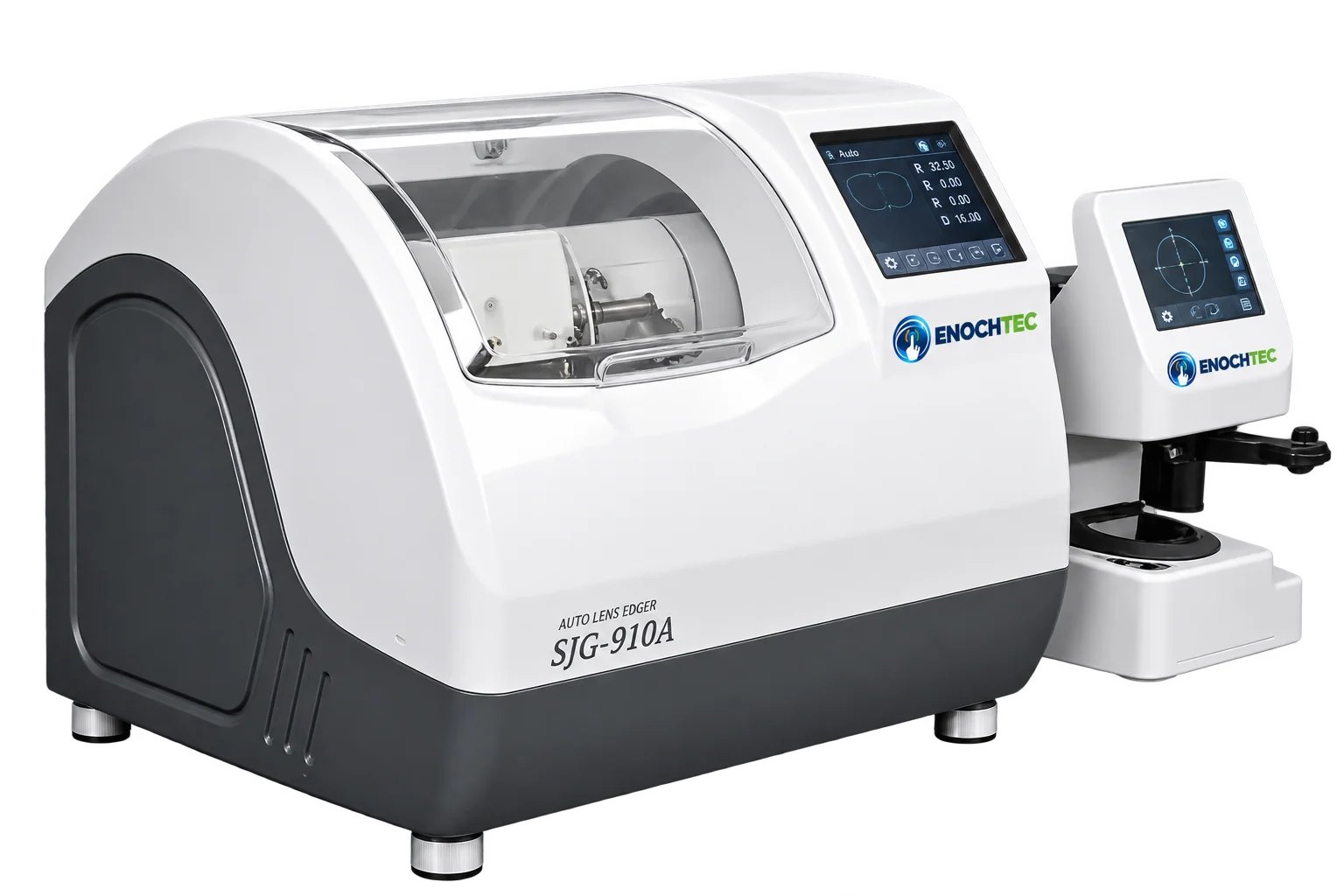
SJG-910A Mini bevel lens edger for thin-rim frames
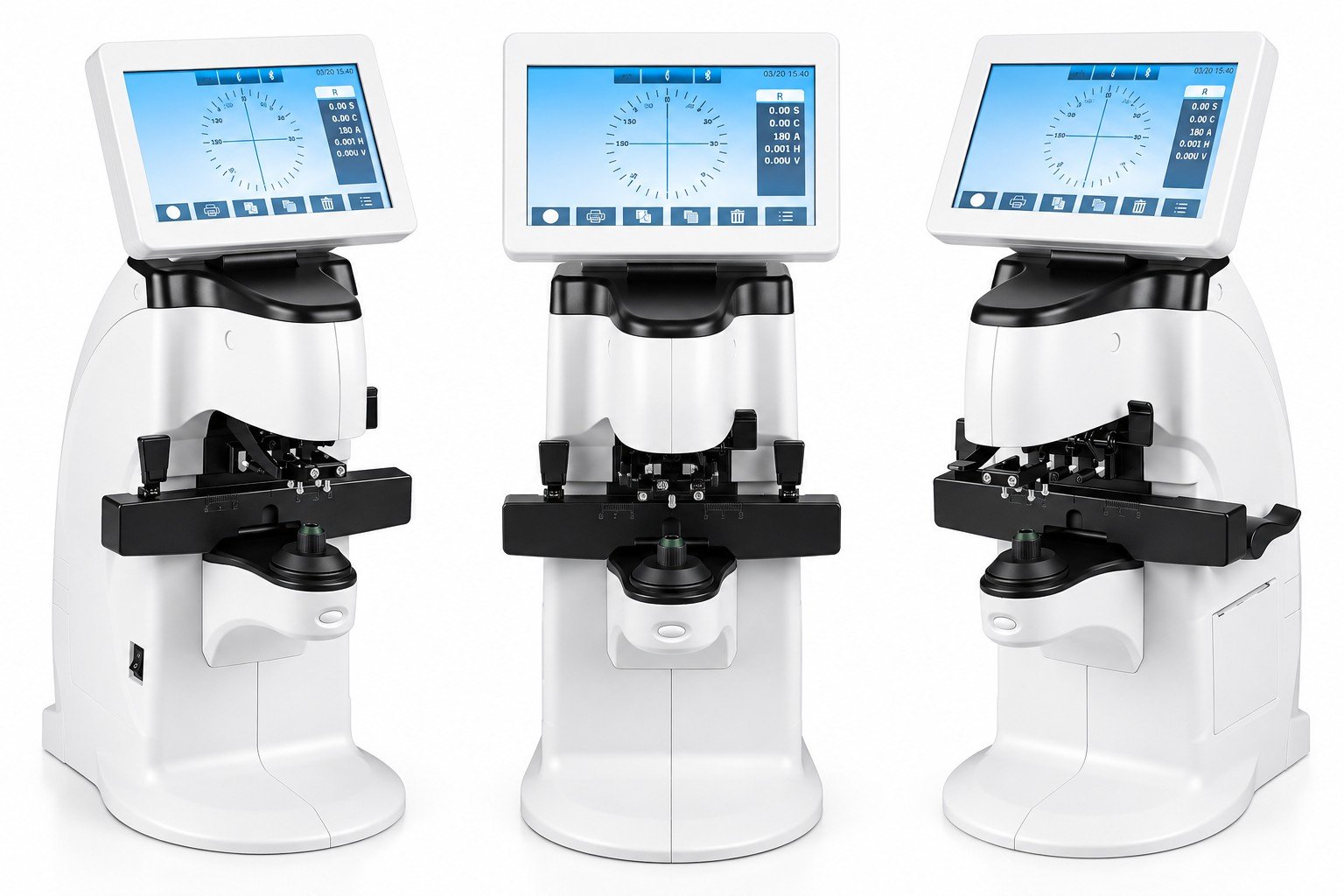
An edging system in two units for shops that fit thin metal and fine-rim frames: an optical scanner that captures the frame shape and centers the lens in one step, and an automatic edger that cuts a mini bevel to fit narrow eyewires. A probe measures the lens surfaces before edging, so the bevel follows the lens curve in 3D, and you can let the edger place it or set the position yourself. It edges resin, high-index and polycarbonate lenses.
Delivery, packing and documents
What the SJG-910A does
Mini bevel for thin rims
Cuts a small bevel that seats in the narrow eyewire of thin metal and fine-rim frames, so the lens edge stays slim in the frame.
Lens probe for 3D edging
Before edging, a probe traces the front and back surfaces of the lens, so the bevel follows the lens curve and edge thickness all the way round.
Automatic or custom bevel position
Sets the bevel automatically, or lets you place it where you want across the edge, for thin and thick lenses.
Scan and center in one step
Optical scanning and center positioning in one unit, with the frame shape captured in 0.5 seconds and power, prism and parallax removed from the live image.
PD and two fitting-height modes
Enter PD and fitting height directly on the scanner, with two fitting-height input modes; the lens is aligned to its axis line automatically.
Polished edges and data link
Polishes bevelled and flat edges with several grinding pressures, links to the scanner for data, and has an 8-inch touch screen.
A closer look at the SJG-910A

Lens probe
Before edging, the probe arm traces the front and back surfaces of the blocked lens, so the mini bevel follows the lens curve in 3D.
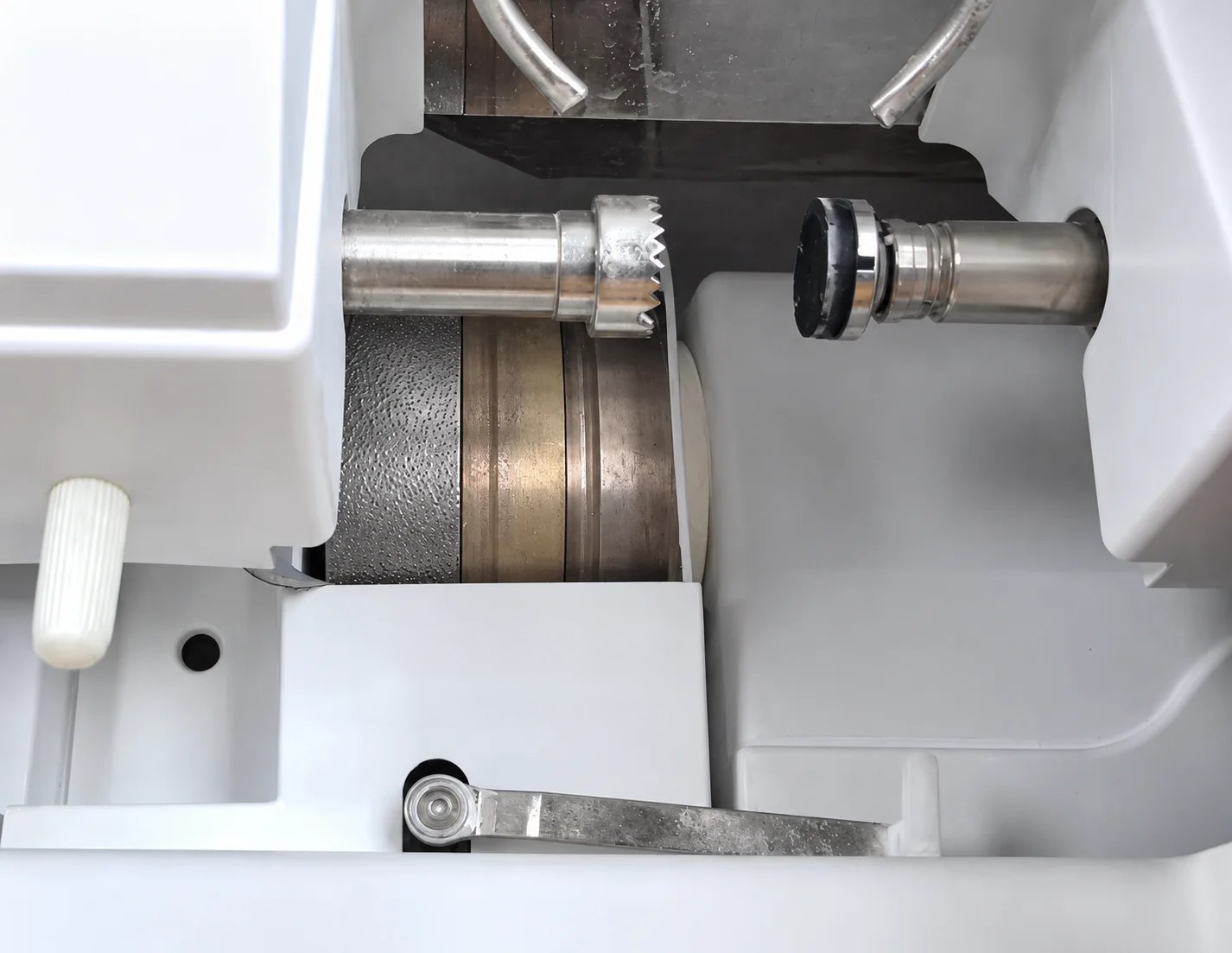
Chuck and wheel stack
The lens is held between the serrated chuck and a rubber-faced holder, above a textured roughing wheel and the finishing wheels with their bevel profiles. Water nozzles cool the lens from above.
SJG-910A in figures
Published specifications. Anything not listed here is confirmed in writing on your quotation, never estimated.
The scanner and the edger are connected for data. One scanner connects to one edger as standard.
Edger
- Edge profiles
- Mini bevel, bevel, polished bevel, polished flat
- Lens measurement
- Probe, front and back surfaces (3D)
- Bevel placement
- Automatic or custom; follows lens curvature
- Lens materials
- Resin, high-index, polycarbonate
- Lens size range
- 25–80 mm
- Grinding wheel
- Ø90 mm
- Clamping pressure
- 3 levels
- Screen
- 8" capacitive touch screen
- Voltage
- AC 220 V / 110 V, 50/60 Hz
- Power
- 550 W
- Dimensions
- 650 × 540 × 450 mm
- Weight
- 65 kg
Scanner
- Shape capture
- 0.5 s
- Functions
- Optical scanning and centering; PD and fitting height entry, two fitting-height modes
- Screen
- 7" capacitive touch screen, 800 × 600
- Screen tilt
- 20°–100°
- Connectable edgers
- 1
- Voltage
- AC 220 V / 110 V, 50/60 Hz
- Power
- 60 W
- Dimensions
- 230 × 370 × 200 mm
- Weight
- 5 kg
Fitting lenses into thin metal rims
What a mini bevel is
A full-rim frame holds the lens by a V-shaped bevel that sits in a groove inside the eyewire. Thin metal and fine-rim frames have a very narrow eyewire, and a standard bevel is too tall for it: the lens will not seat, the rim gapes, or the edge shows as a thick band behind the wire.
A mini bevel is a smaller bevel cut for those narrow eyewires. The lens drops into the rim, the screw closes without strain, and the edge looks slim from the front. That is why shops selling light titanium and fine metal frames keep an edger that can cut one.
Why the bevel follows the curve
On a lens with a steeper base curve, a bevel cut at a fixed position wanders toward the front or back of the edge as it goes around the shape. Before grinding, the SJG-910A runs a probe over the front and back surfaces of the lens, so it knows the curve and edge thickness all the way round, and cuts the bevel along that 3D path. That keeps a mini bevel on the line the frame needs. You can let it place the bevel automatically or set a custom position, for example to hide more of a thick minus edge behind the rim.
How the system works
The scanner captures the frame shape in about half a second and centers the lens on a corrected live image. You enter PD and fitting height on the scanner, using either of two fitting-height modes, and it aligns the lens to its axis line before the edger grinds and polishes.
Check before you order
- Frame types: mini bevel and standard bevel cover thin-rim and full-rim frames. It does not groove or drill: add the CP-3-800 for semi-rimless or the CP-24A for drill mounts.
- Lens materials: resin, high-index and polycarbonate are listed. Glass is not; for glass, see the SJG-900.
- Lens sizes: 25–80 mm.
- Bench space for two units: 650 × 540 mm for the 65 kg edger and 230 × 370 mm for the scanner, with room for water supply and drainage.
- Power: 550 W for the edger and 60 W for the scanner, ideally on a dedicated circuit with no extension cords.
- Consumables to order with it: blocking pads and suction cups that fit the chuck, plus spare wheels.
Good practice with thin rims
- Scan the frame and check the traced shape and size on the scanner screen.
- Enter PD and fitting height, center the lens on the live image and block it.
- Let the probe measure the lens, choose the mini bevel, and check or adjust the bevel position against the lens thickness.
- Edge slightly large first on a new frame style, try the lens in the rim, then finish to size.
- Polish the bevel if the edge will show behind the wire.
- Mount and do a final check against your tolerance standard (ANSI Z80.1 in the US).
Care and maintenance
- Never move the probe by hand; let the machine drive it, and keep its tip clean.
- A worn bevel wheel rounds the mini bevel first: check the profile regularly and replace wheels before the fit suffers.
- Rinse the grinding chamber daily and clear polycarbonate and high-index swarf between jobs.
- Keep the scanner’s lens table and optics clean; dust shows up in the image.
Background sources: Edger basics (20/20 Magazine) · Getting an edge-ucation (20/20 Magazine)
Often ordered with the SJG-910A
SJG-910A questions
What is a mini bevel?
A smaller bevel than standard, cut so the lens seats in the narrow eyewire of thin metal and fine-rim frames without a gap or a thick visible edge.
Can it edge standard full-rim frames too?
Yes. It cuts standard bevels and polished flat edges as well, with the bevel placed automatically or at a custom position.
Does it measure the lens before edging?
Yes. A probe traces the front and back surfaces of the lens, and the edger uses that 3D data to place the bevel along the lens curve.
Can the SJG-910A edge glass lenses?
Glass is not listed; resin, high-index and polycarbonate are. For glass on a scanner-based system, see the SJG-900.
Does it groove semi-rimless lenses?
No. For nylon-cord frames add the CP-3-800 groover, or choose the SJG-1000AK, which grooves on the edger.
SJG-910A or SJG-1000AK?
Choose the SJG-910A if you fit many thin metal full-rim frames and need a mini bevel; choose the SJG-1000AK if you fit semi-rimless frames often and want grooving on the edger.