
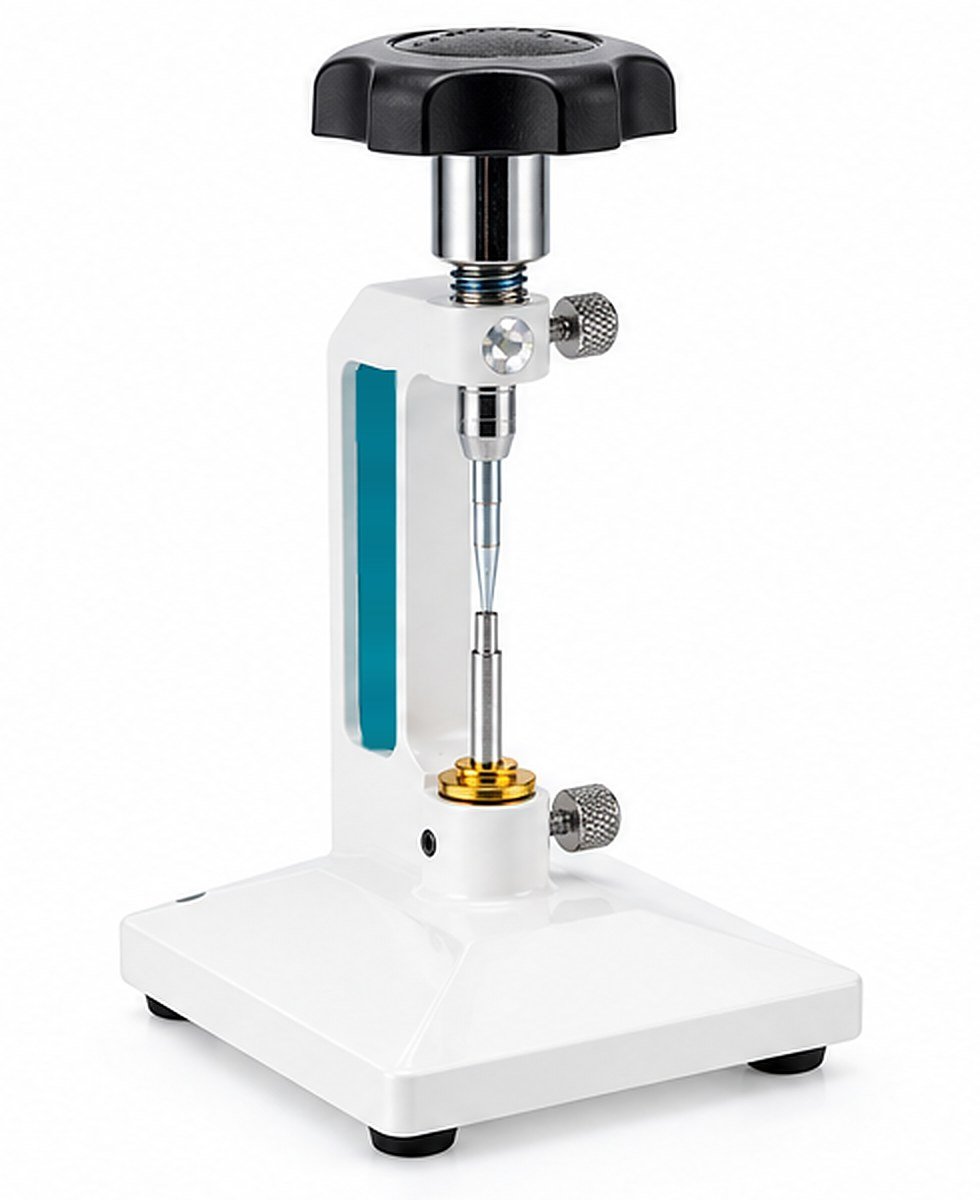
CP-33 Eyeglass screw extractor for broken frame screws
A bench tool that pushes broken, stripped or seized screws out of eyeglass hinges. The hinge sits between two needles on one axis: the bottom needle supports it from below, and turning the knob drives the upper needle down to press the screw out, without twisting the frame.
Delivery, packing and documents
What the CP-33 does
Knob-driven upper needle
Turn the knob to move the upper needle down onto the broken screw and press it out from the top.
Bottom support needle
The bottom needle supports the screw and hinge from below, so the pressure goes into the screw and not into the frame.
Two lock screws
One lock screw fixes the upper needle and one fixes the bottom needle, so neither shifts while you press.
Needles on one axis
Upper and bottom needles meet on the same line for accurate positioning: the screw leaves the barrel straight.
Two spare needles
A conical tip for most screws and a cylindrical tip for special screws.
Compact bench tool
17 cm tall on an 11 × 9 cm base, with feet under the base.
A closer look at the CP-33
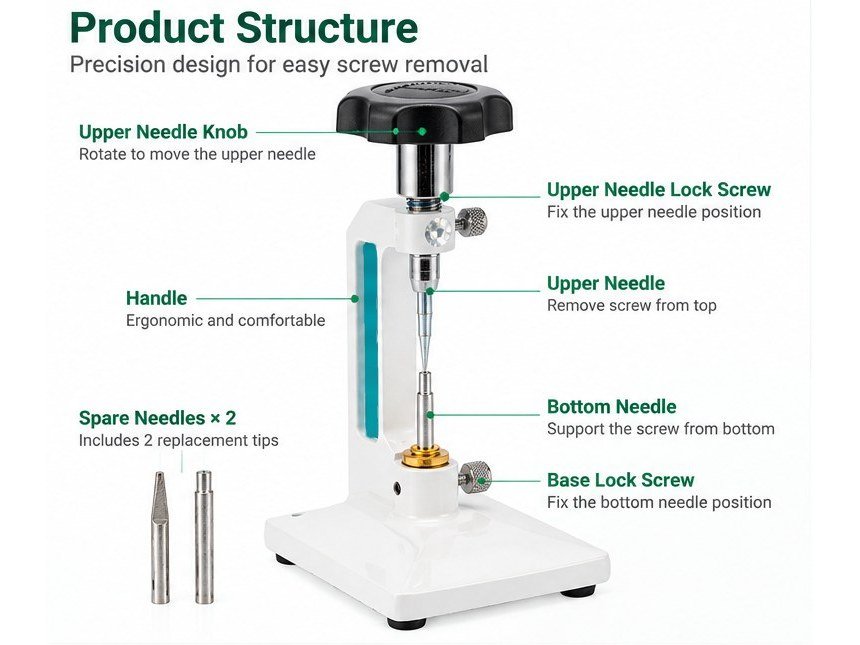
Parts at a glance
Turn the knob to move the upper needle; a lock screw fixes its position. The bottom needle supports the screw from below and has its own lock screw. Two spare needles come with the tool.
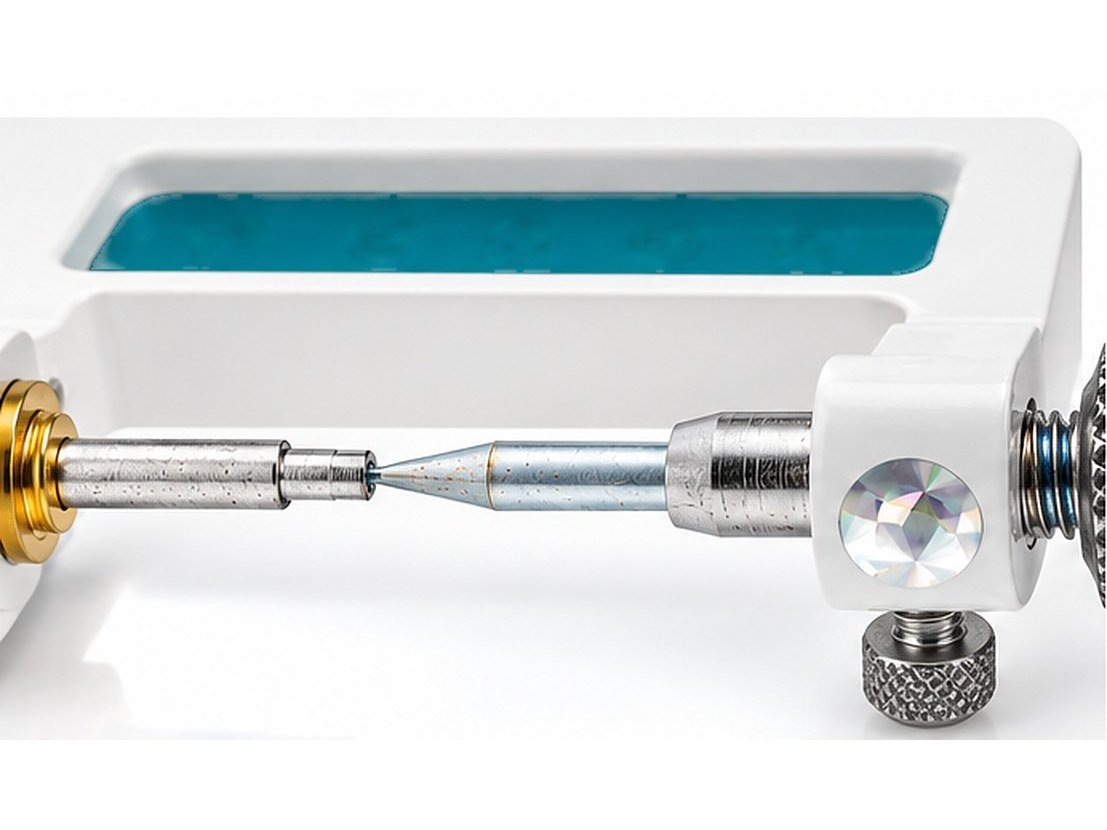
Needles on one axis
The upper and bottom needles meet on the same line, so the screw is pressed straight out of the hinge barrel instead of being twisted.
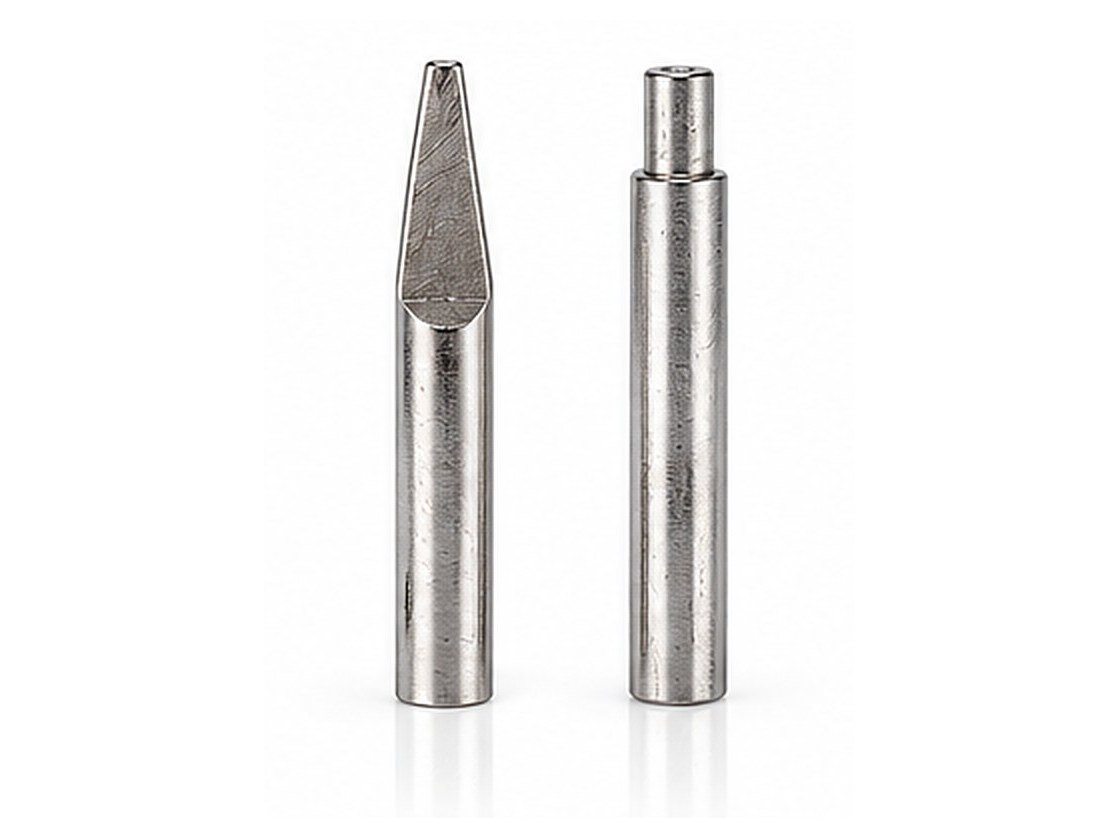
Two spare needles
A conical tip for most screws and a cylindrical tip for special screws.
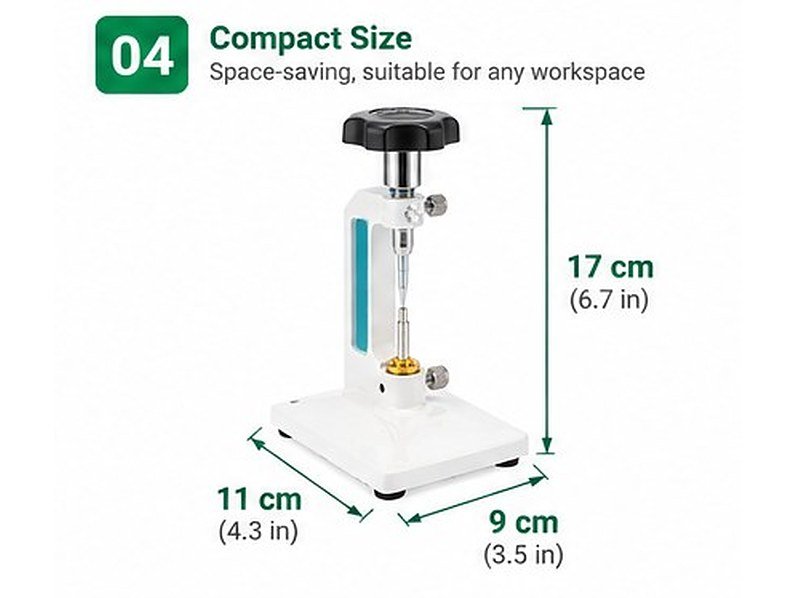
Compact
17 cm tall on an 11 × 9 cm base, so it fits on any repair bench.
CP-33 in figures
Published specifications. Anything not listed here is confirmed in writing on your quotation, never estimated.
Needle sizes and the shipping weight are confirmed on your quotation.
CP-33
- Type
- Bench screw extractor, hand-operated
- Height
- 17 cm (6.7 in)
- Base
- 11 × 9 cm (4.3 × 3.5 in)
- Upper needle
- Moved by the knob, fixed with a lock screw
- Bottom needle
- Supports the screw from below, fixed with a lock screw
- Spare needles
- 2: conical tip, cylindrical tip
- Power
- None, manual
Removing a broken screw from eyeglasses
How it works
Hinge screws in eyeglass frames are tiny, so they strip, rust or snap. Once the head is gone or the slot is chewed, a screwdriver has nothing to grip and the rest of the screw stays in the hinge barrels. Pliers can pull at it, but they tend to twist the barrels and mark the frame.
A bench screw extractor works differently. The hinge rests on the bottom needle, the upper needle is lowered onto the broken end of the screw, and turning the knob presses the screw straight out along the hinge axis. Because the force runs through the screw rather than the frame, the barrels are not bent. Opticians advise patience: press gradually rather than forcing it, and warm plastic frames first so the hinge insert releases more easily.
Drilling the screw out is the last resort. It damages the thread in the barrel, so the hinge then needs a self-tapping or larger screw, or re-tapping. General hardware screw extractors are too large and aggressive for eyeglass hinges; use tools made for optical work.
Check before you order
- The frames you repair most: metal, acetate, spring hinges, and how often screws break in them.
- Which needle suits the screws you see: conical for most screws, cylindrical for special screws.
- Replacement screws in the sizes you use, so the frame can be finished once the old screw is out.
- A frame warmer for plastic frames and a set of optical screwdrivers on the same bench.
- Spare needles, because a bent or blunted tip slips off the screw.
Good practice
- Remove the lens if it sits close to the hinge, and take out any loose parts.
- Fit the needle that suits the screw and tighten the lock screws.
- Set the hinge on the bottom needle with the screw hole centered over it.
- Turn the knob to bring the upper needle down onto the broken end of the screw, and check that both needles line up with the hole.
- Keep turning slowly to press the screw out; stop and re-check the alignment if it resists.
- Clean the hole, check the thread, and fit a new screw.
Care and maintenance
- Wipe the needles after use and keep them lightly oiled against rust.
- Replace a bent or blunted needle before the next job.
- Check both lock screws before each job so the needles cannot shift under pressure.
- Keep the spare needles in a labeled box on the bench.
Background sources: What is a screw extractor for eyeglasses? (Lens.com) · Broken screw stuck in frame (OptiBoard forum) · Tooling up the dispensary (Eyecare Business)
Often ordered with the CP-33
CP-33 questions
What is an eyeglass screw extractor?
A tool for removing broken, stripped or seized screws from eyeglass hinges when a screwdriver can no longer grip them. The CP-33 is the bench type: it presses the screw out between two needles instead of twisting it.
How do you remove a broken screw from glasses?
Rest the hinge on the bottom needle, lower the upper needle onto the broken end of the screw with the knob, check the alignment, and keep turning slowly until the screw is pressed out. Then clean the hole and fit a new screw.
Will it damage the frame?
The screw is pressed out along the hinge axis while the bottom needle supports it, so the barrels are not twisted. Align the needles with the hole before you press, and warm plastic frames first.
Which needle should I use?
The conical tip suits most screws; the cylindrical tip is for special screws. Tell us which frames you repair and we confirm the needle sizes on the quotation.
Do I still need to drill?
Only if the screw will not move. Drilling damages the thread, so the hinge then needs a self-tapping or larger screw.