
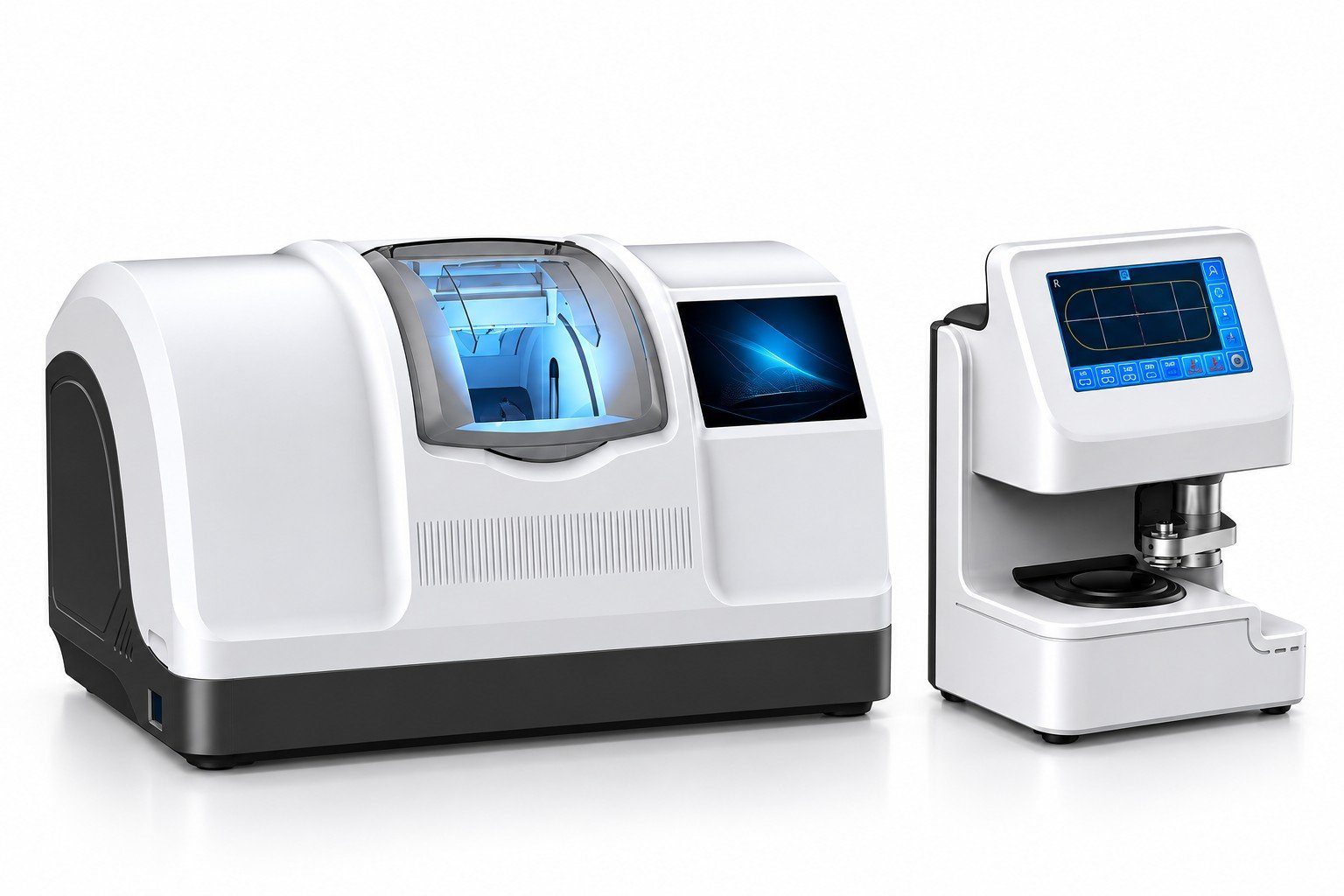
SJG-1000AK 3D patternless lens edger with automatic grooving
A 3D patternless edging system in two units: an optical scanner that captures the frame shape and centers the lens in one step, and an automatic edger that bevels, grooves and polishes. No pattern is needed. It edges resin, high-index and polycarbonate lenses, with three clamping pressures for different lenses.
Delivery, packing and documents
What the SJG-1000AK does
Scan and center in one step
Optical scanning and center positioning are built into one unit, and the frame shape is captured in 0.5 seconds.
Live centering guidance
Real-time imaging on the 7-inch 800 × 600 touch screen confirms when the lens is at the best center position.
Automatic compensation
The scanner compensates for the lens’s power, prism and parallax, so the image you center on is not distorted by the lens itself.
Automatic bevel and groove
Bevels and grooves automatically, with several modes for placing the bevel or the groove on the edge.
Polished edges
Polishes both bevelled and flat edges.
Three clamping pressures
Three pressure levels to suit different lenses, with an 8-inch touch screen on the edger.
A closer look at the SJG-1000AK
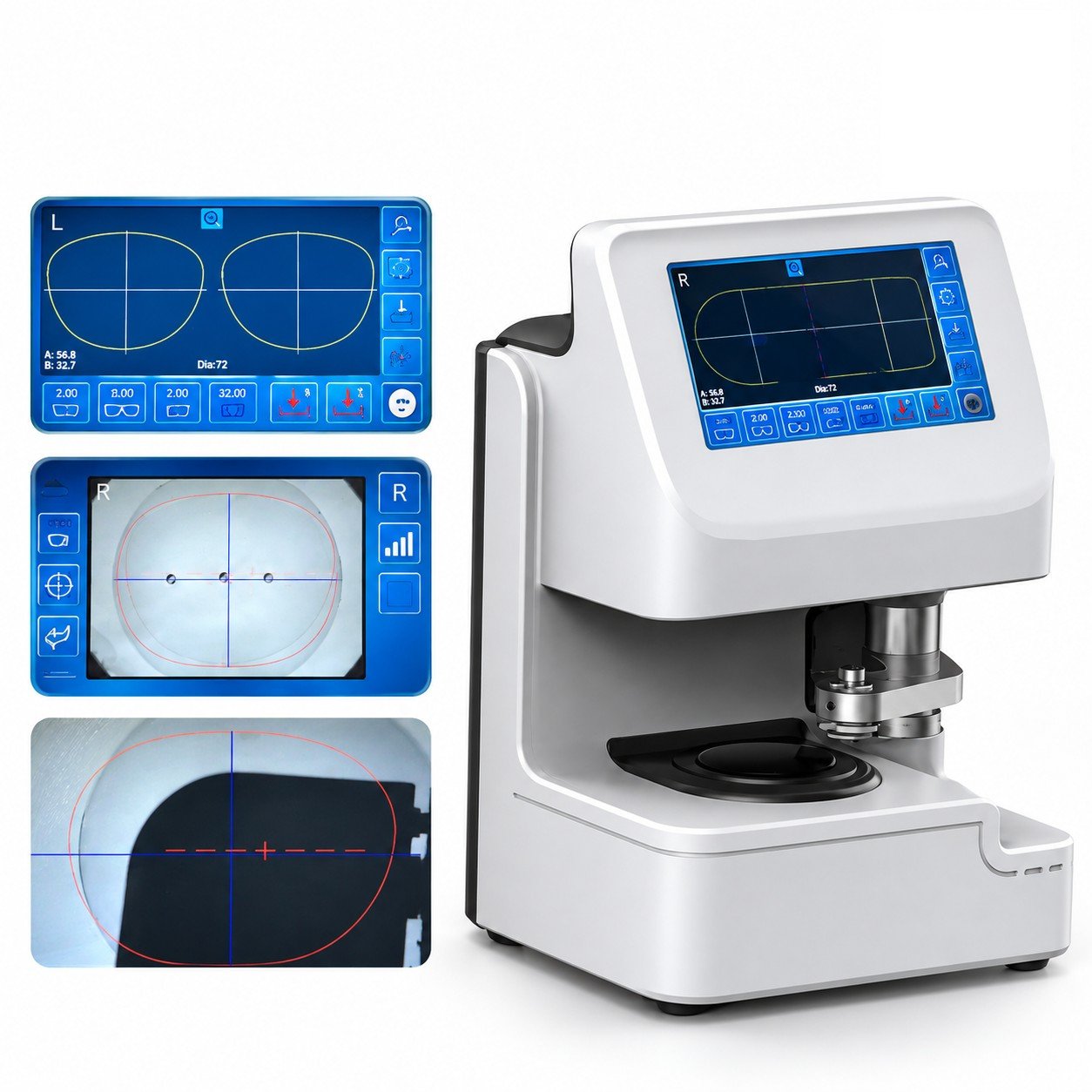
Scanner screens
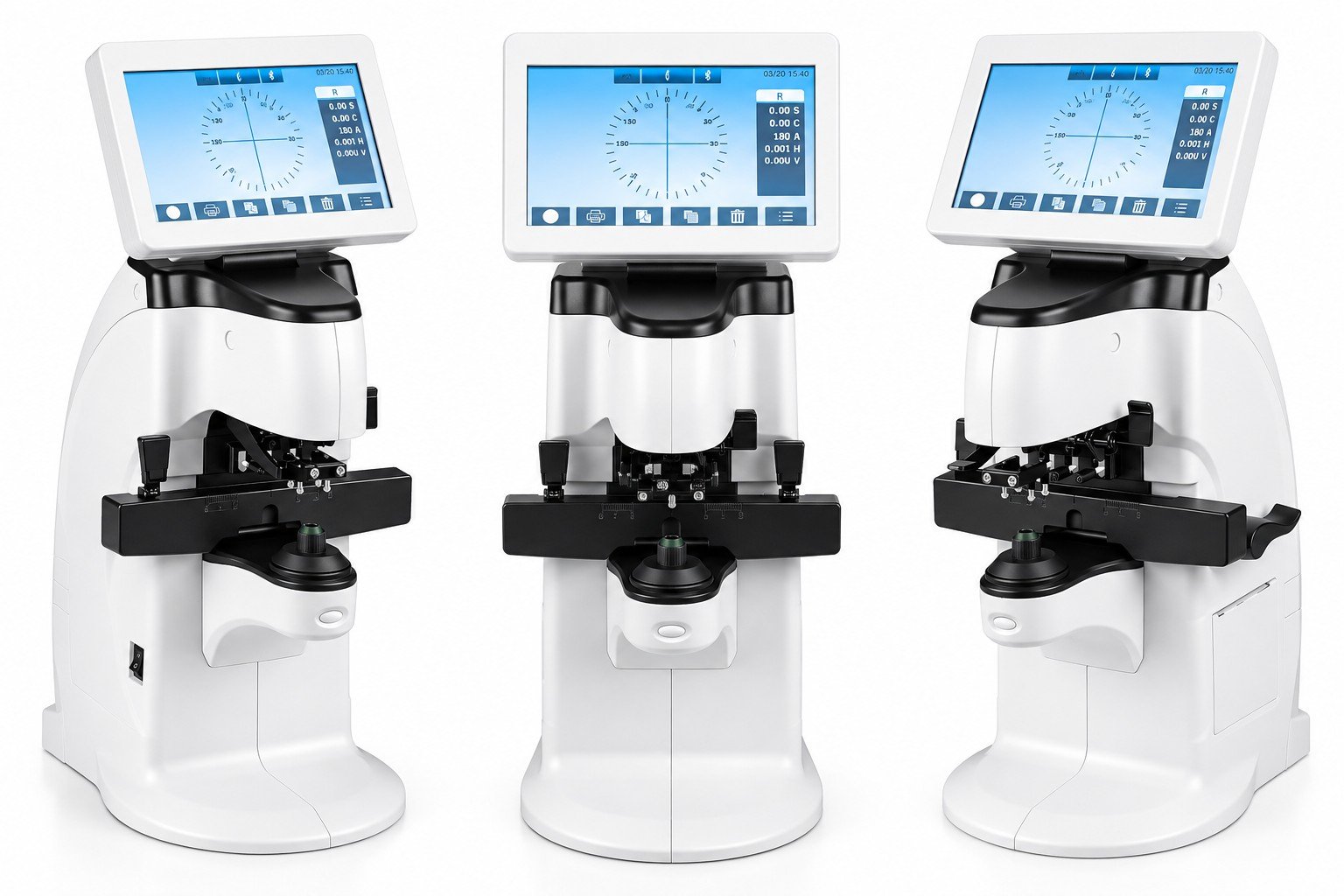
The 7-inch touch screen shows the traced shape with its A and B sizes and diameter, the live centering view with the lens on the holder, and the lens edge against the target shape.
SJG-1000AK in figures
Published specifications. Anything not listed here is confirmed in writing on your quotation, never estimated.
The scanner and the edger are connected for data. One scanner connects to one edger as standard.
Edger
- Lens size range
- 22–80 mm
- Grinding wheel
- Ø90 mm
- Clamping pressure
- 3 levels
- Edge profiles
- Bevel, groove, polished bevel, polished flat
- Lens materials
- Resin, high-index, polycarbonate
- Screen
- 8" capacitive touch screen
- Voltage
- AC 220 V / 110 V, 50/60 Hz
- Power
- 550 W
- Dimensions
- 680 × 460 × 450 mm
- Weight
- 60 kg
Scanner
- Shape capture
- 0.5 s
- Functions
- Optical scanning and centering
- Screen
- 7" capacitive touch screen, 800 × 600
- Screen tilt
- 20°–100°
- Connectable edgers
- 1
- Voltage
- AC 220 V / 110 V, 50/60 Hz
- Power
- 60 W
- Dimensions
- 230 × 370 × 200 mm
- Weight
- 5 kg
Patternless edging, from bevel to groove
How it works
“Patternless” means the edger needs no physical pattern for each frame shape. The shape is captured optically and sent to the edger as data. On the SJG-1000AK the scanner captures the shape in about half a second and centers the lens at the same time, guided by a live image on its touch screen.
When you center a lens by looking through it, the lens’s own power and prism shift what you see. The scanner compensates for power, prism and parallax, so the optical center lands where the prescription needs it. That matters because decentration creates prism: a 1 mm error on a 4 D lens gives 0.4 prism diopters.
The edger then grinds the lens to shape: a bevel for full-rim frames, a groove for nylon-cord semi-rimless frames, or a flat polished edge. Three clamping pressures let you ease off for delicate or slippery coated lenses. Drilling is not part of the system, so shops that fit drill mounts add a drilling machine such as the CP-24A.
Check before you order
- Frame types you fit: bevel and groove cover full-rim and semi-rimless; add a drill such as the CP-24A for rimless drill mounts.
- Lens materials: resin, high-index and polycarbonate are listed. Ask us before planning glass.
- Lens sizes: 22–80 mm.
- Bench space for two units: 680 × 460 mm for the 60 kg edger and 230 × 370 mm for the scanner, with room for water supply and drainage.
- Power: 550 W for the edger and 60 W for the scanner. Trade guides recommend a dedicated circuit for an edger and no extension cords.
- Consumables to order with it: blocking pads and suction cups that fit the chuck, plus spare wheels.
Good practice
- Scan the frame shape and check it on the scanner screen.
- Center the lens with the live image guide and block it.
- Choose the lens material, the edge profile (bevel, groove or flat) and the bevel or groove position.
- Pick the clamping pressure: lower for slippery coated lenses.
- Edge, check the size against the frame before removing the block, and polish if the edge will show.
- Mount and do a final check against your tolerance standard (ANSI Z80.1 in the US).
Care and maintenance
- Rinse the grinding chamber daily and change the water regularly; follow the machine manual for intervals.
- Clear polycarbonate and high-index swarf from the chamber and clamp pads between jobs.
- Keep the scanner’s lens table and optics clean; dust shows up in the image.
- Replace dull wheels before they start to chip edges.
Background sources: Edger basics (20/20 Magazine) · Getting an edge-ucation (20/20 Magazine) · Eight tips for processing rimless or semi-rimless eyewear (Eyecare Business)
Often ordered with the SJG-1000AK
SJG-1000AK questions
What does patternless mean?
The edger needs no physical pattern for each frame shape. The scanner captures the shape optically and sends it to the edger as data.
Can it groove semi-rimless lenses?
Yes. Bevelling and grooving are automatic, with several modes for positioning the bevel or the groove.
Which lens materials can it edge?
Resin, high-index and polycarbonate are listed. Tell us your lens mix and we confirm the wheel configuration on the quotation.
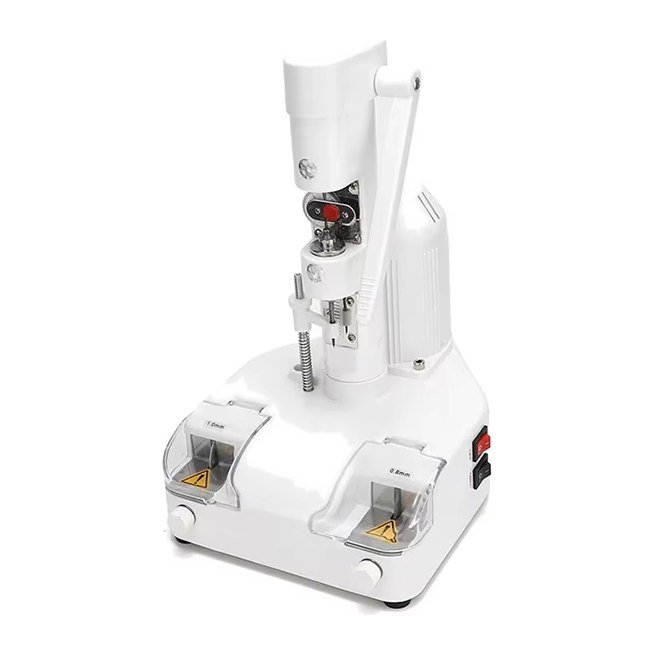
Does it drill rimless lenses?
No. For drill mounts, add the CP-24A drilling and slotting machine.
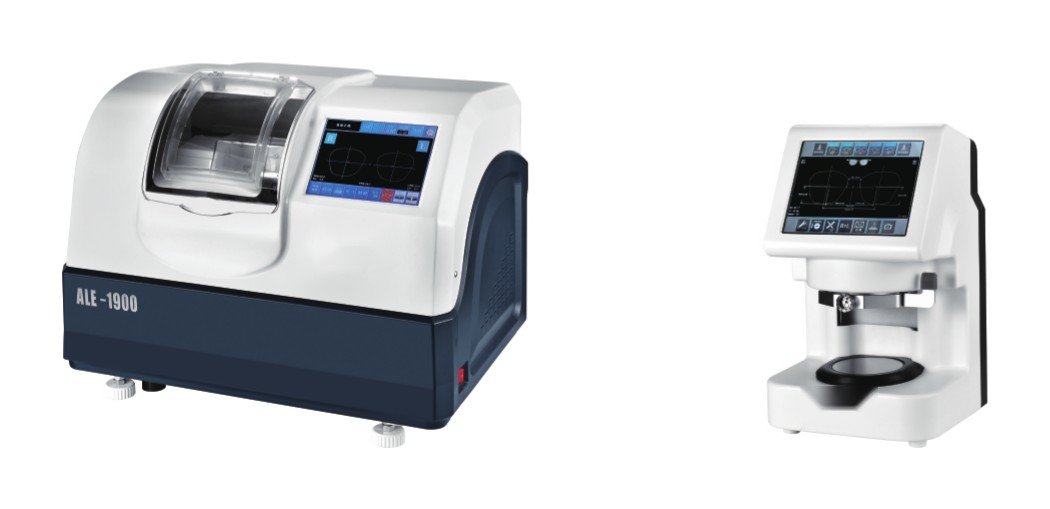
SJG-1000AK or ALE-1900?
Both scan and center the lens on a separate unit. The SJG-1000AK adds automatic grooving and three clamping pressures; the ALE-1900 bevels and polishes. Choose the SJG-1000AK if you fit semi-rimless frames regularly.