
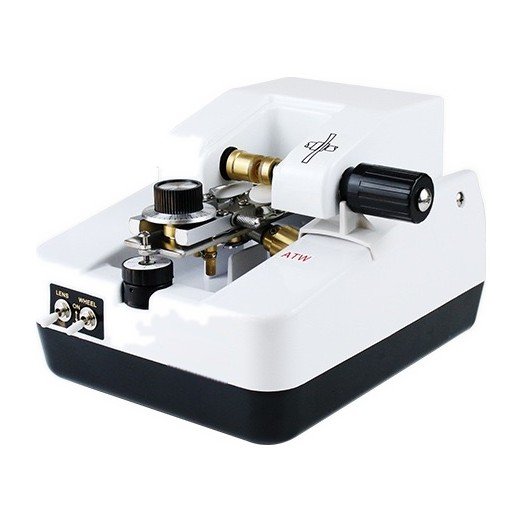
LY-11ATW Lens beveller for thinning thick lens edges
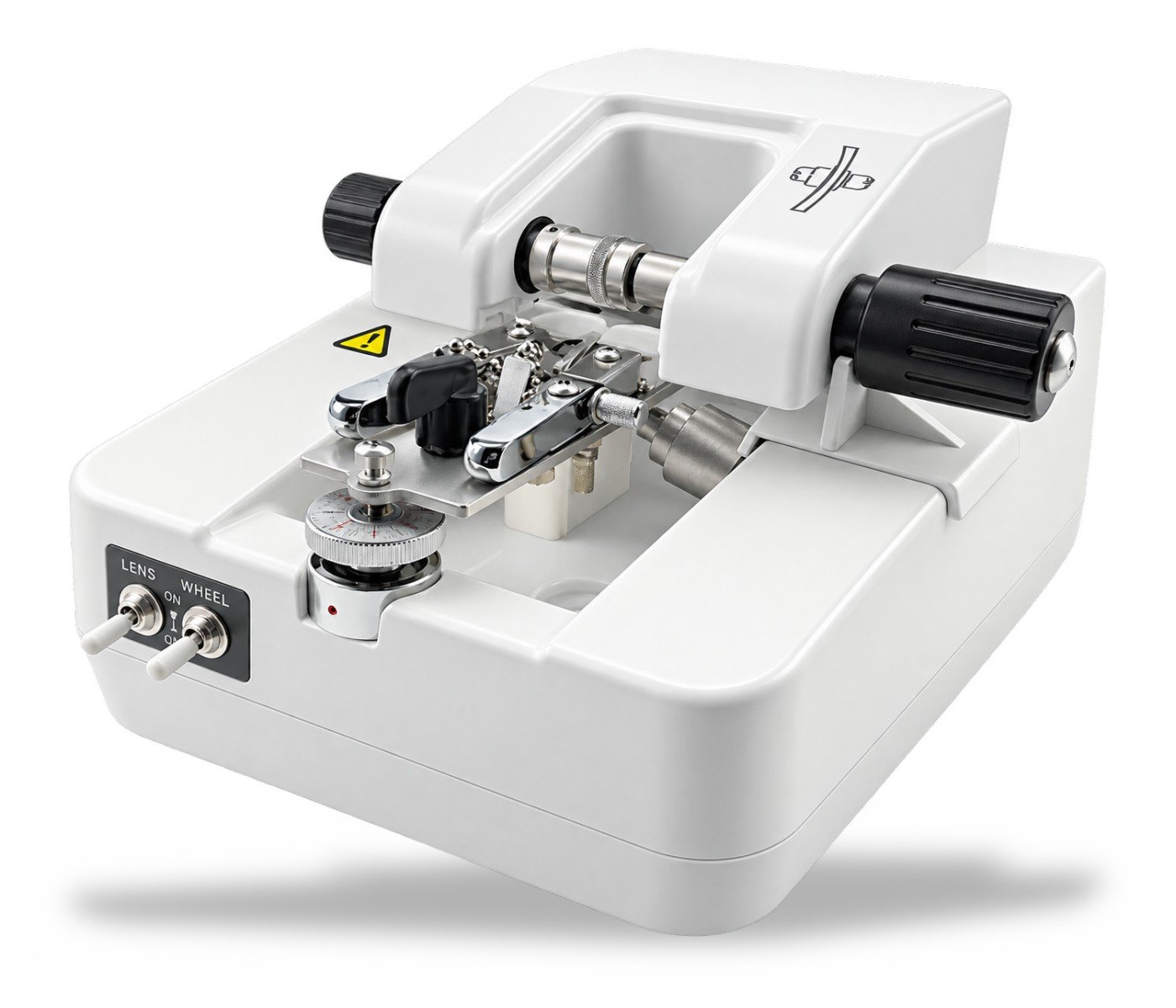
A compact beveller that mills the inside edge of full-rim and rimless lenses, so thick lenses look thinner and neater in the frame. A hardened tungsten steel cutter runs at 6,000 rpm, the cutting angle is set on a 0–9 dial, and a large guide wheel keeps the lens on track. For resin and PC lenses.
Delivery, packing and documents
What the LY-11ATW does
Inside-edge thinning
Mills the inside edge of full-rim and rimless lenses, so thick edges look thinner in the frame.
Tungsten steel cutter
A hardened tungsten steel milling cutter running at 6,000 rpm.
Adjustable cutting angle
A 0–9 dial sets how much the edge is thinned.
Large guide wheel
Keeps the lens on track during thinning.
Separate switches
One switch for lens rotation, one for the cutter motor.
Resin and PC lenses
Suitable for resin and PC lenses.
A closer look at the LY-11ATW
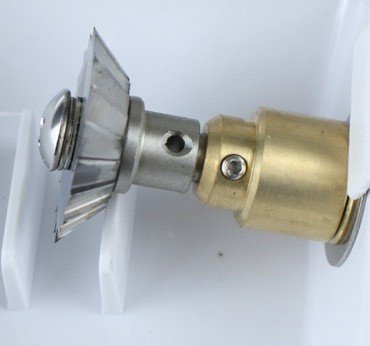
Tungsten steel cutter
A hardened tungsten steel milling cutter with a special head, for a fast, clean cut on the lens edge.
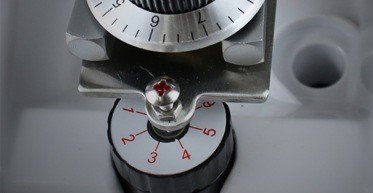
Adjustable cutting angle
Set how much the edge is thinned on the numbered dial: turning from 0 to 9 gradually closes the angle, turning from 9 back to 0 opens it.
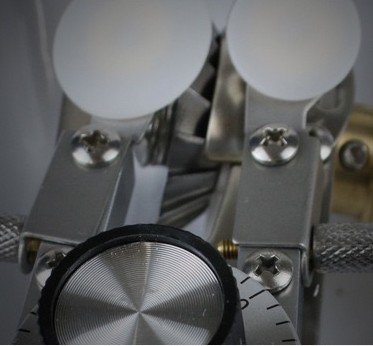
Large guide wheel
A large, free-running guide wheel keeps the lens on track, so the thinning does not wander.
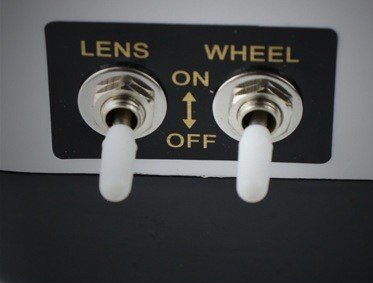
Two switches
LENS starts and stops the lens rotation; WHEEL starts and stops the cutter motor.
LY-11ATW in figures
Published specifications. Anything not listed here is confirmed in writing on your quotation, never estimated.
The LY-11ATW is also listed as LY-ATW. Other voltages are confirmed on your quotation.
LY-11ATW
- Type
- Lens beveller (edge thinning)
- Motor speed
- 6,000 rpm
- Power
- 80 W
- Voltage
- AC 220 V / 50 Hz
- Weight
- 2.6 kg
- Dimensions (W × D × H)
- 210 × 170 × 150 mm
- Inner box
- 270 × 230 × 220 mm
- Cutter
- Tungsten steel
- Frames
- Full-rim and rimless
- Lenses
- Resin, PC
Versions
| Model | Difference |
|---|---|
| LY-11ATW | Lens beveller for the inside edge of full-rim and rimless lenses |
| LY-11ATM | Multi-angle lens beveller for lenses of different edge thickness |
Making thick lenses look thinner
How it works
After edging, a lens has sharp ledges at the front and back of its edge, and on a strong minus lens the back edge can stand well proud of the frame. Bevelling takes material off that edge. A light chamfer is a safety bevel; heavier work on the inside edge is cosmetic thinning, known in the Chinese trade as “mei bo”.
On the LY-11ATW the lens turns against a tungsten steel milling cutter while a guide wheel follows the edge. The dial sets the cutting angle, and with it how much of the edge is taken away. The two switches let you start the lens rotation and the cutter separately.
Lens choice still matters most: a higher-index lens and a smaller, rounder frame reduce edge thickness before any edge work. Trade figures put the reduction from standard plastic to 1.66 at about 11% on a −6.00 lens. Polishing the finished edge removes the frosted look.
Check before you order
- Frame types you fit: the LY-11ATW works on full-rim and rimless lenses.
- Lens materials: resin and PC are listed; glass is not.
- Edge thicknesses you handle; for a range of thicknesses also consider the multi-angle LY-11ATM.
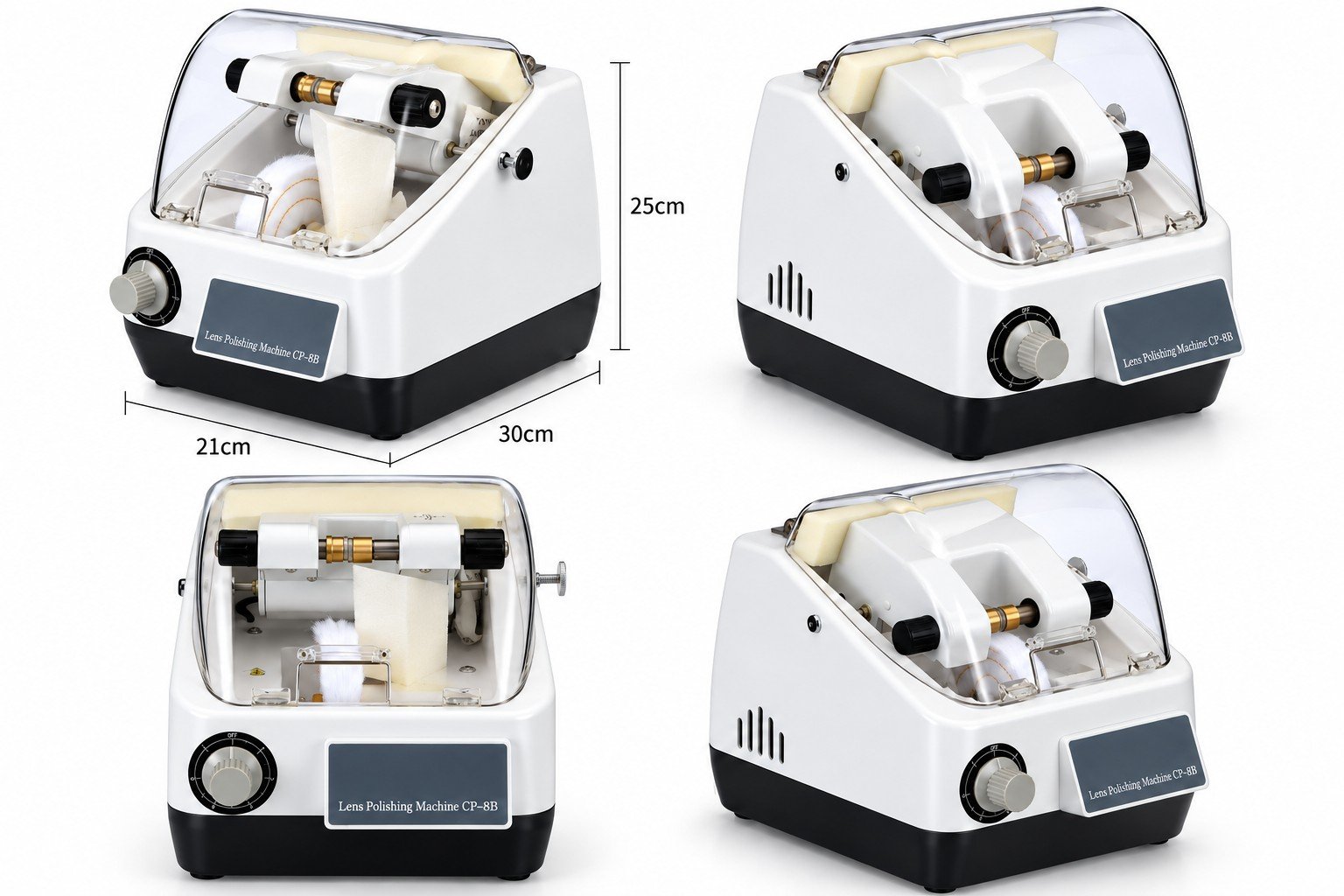
- A polisher to finish the thinned edge (see the CP-8B).
- Voltage: AC 220 V / 50 Hz as standard; ask us for other voltages.
Good practice
- Edge the lens to size first, and check the fit in the frame.
- Start with a small setting on the angle dial; you can always take more off.
- Switch on the lens rotation, then the cutter, and let the guide wheel follow the edge.
- Keep the thinning even around the lens so both lenses of a pair match.
- Polish the edge after thinning, then check the lens in the frame from the front and the side.
Care and maintenance
- Clear shavings after each job.
- Replace the cutter when the cut turns rough or chips.
- Keep the clamp faces and guide wheel clean so lenses sit flat and track straight.
Background sources: Lens makeover (20/20 Magazine) · Living on the edge (Eyecare Business) · US patent 4,373,298: lens edge beveling (background section)
Often ordered with the LY-11ATW
LY-11ATW questions
Does edge thinning change the prescription?
Bevelling works on the lens edge, outside the area you look through. The sources we reviewed report no change in lens power from a normal edge chamfer. Heavy cutting can still ruin a lens, so take material off in light passes.
Which frames and lenses is it for?
Full-rim and rimless frames, with resin and PC lenses. It mills the inside edge of the lens.
How do I set how much it thins?
With the numbered dial. Turning from 0 towards 9 gradually closes the cutting angle; turning back towards 0 opens it.
Should I polish after thinning?
Usually yes. A polished edge looks clear rather than frosted; the CP-8B automatic polisher does this without hand-feeding.