
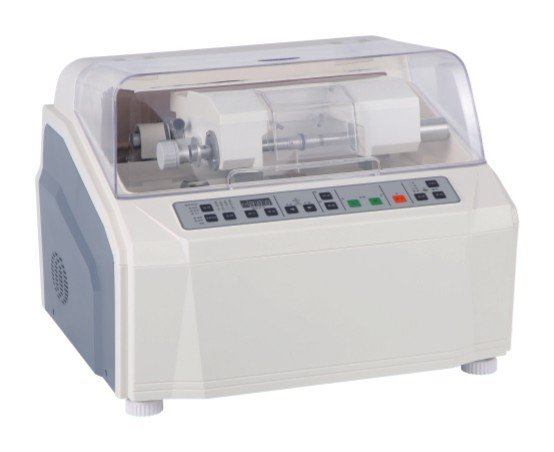
AE-688P / 688V Lens edging machine for PC, resin and glass
A lens edging machine that follows a template clamped in an all-aluminum holder. It processes PC, resin and glass lenses, with dedicated functions for polycarbonate, fragile lenses and slippery coated lenses, and runs on AC 100–240 V.
Delivery, packing and documents
What the AE-688 does
PC function
Automatic control of water discharge for polycarbonate, with a PC stainless steel grinding wheel.
Fragile function
A stepped grinding disc for lenses that chip easily.
Slippery function
Processes slippery coated lenses without misalignment.
Dual-spout water
Two water channels reduce dust build-up in the grinding chamber.
Secure template clamp
An all-aluminum template clamp, tightened with a handwheel, holds the template firmly.
Suction-cup optimization
Select the suction cup you use and the machine optimizes the bevel position to suit it. A wide-range clamp adapts to different lenses.
AE-688 in figures
Published specifications. Anything not listed here is confirmed in writing on your quotation, never estimated.
AE-688P and AE-688V share identical specifications. They are pictured with different sets of four grinding wheels, so tell us your lens materials and we confirm which set suits you.
AE-688P / AE-688V
- Grinding diameter range
- Φ18–80 mm
- Grinding wheel
- Φ100 mm
- Clamping force
- Multi-stage pressure regulation
- Lens materials
- PC, resin, glass
- Rotary motors
- DC motors on low-voltage DC power
- Voltage
- AC 100–240 V, 50/60 Hz
- Power
- 500 W
- Ambient temperature
- −5 to 40 °C
- Dimensions
- 540 × 480 × 380 mm
- Packaging
- 688 × 583 × 555 mm
- Weight
- 43 kg
Edging PC, resin and glass on the AE-688
How it works
The AE-688 edges to a template. The template of the frame shape sits in the aluminum clamp, the lens is blocked on a suction cup at the right decentration, and the machine grinds the lens to follow the template: a rough pass first, then the finishing pass that forms the bevel.
Lens materials behave differently under the wheel. CR-39 and other resins produce fine swarf and edge easily with steady water. Polycarbonate is the exception: lens makers recommend sharp wheels and little or no water while reducing size, because heat builds up and can smear the edge. That is what the AE-688 PC function manages, by controlling the water discharge automatically.
Glass needs a wheel made for glass, and the chamber should be cleaned between glass and plastic jobs so glass debris does not scratch plastic lenses. Hydrophobic and anti-reflective coatings are slippery; the slippery function and the right pads keep the lens from rotating on the block.
Check before you order
- Which wheel set you need (AE-688P or AE-688V) for the materials you edge most.
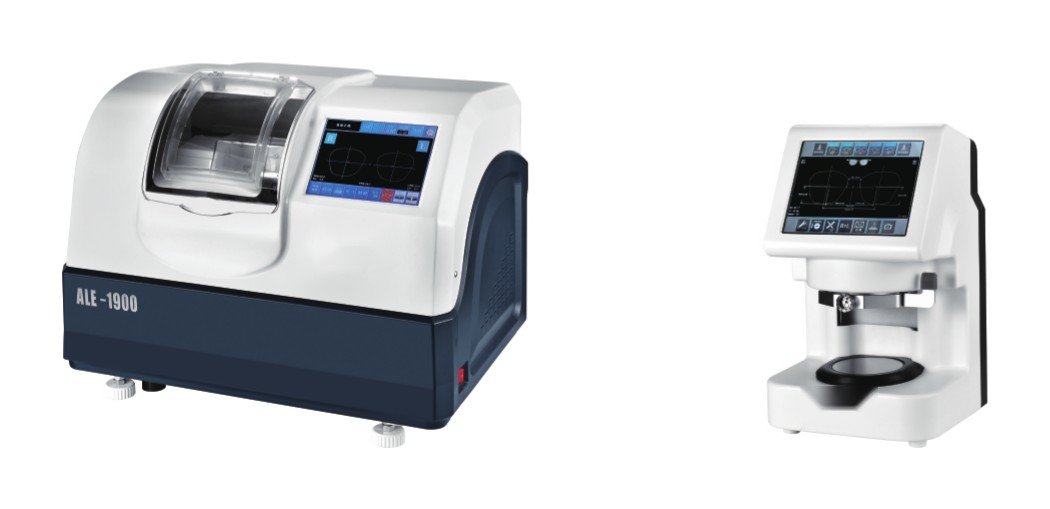
- Whether you want to work with templates, or would rather scan the lens (see the ALE-1900).
- Suction cups and pads that match the chuck, plus spare cups for daily use.
- Bench space for 540 × 480 mm, a 43 kg machine, water supply and drainage.
- Power: 500 W on AC 100–240 V, so one model covers 110 V and 220 V markets.
Good practice
- Clamp the template in the aluminum holder and tighten the handwheel.
- Verify and mark the lens in the lensmeter, then block it on the suction cup.
- Select the lens material and the function you need: PC, fragile or slippery.
- Choose the suction cup setting so the machine places the bevel correctly.
- Edge, check the size in the frame, and touch up on a hand edger if needed.
- Clean the chamber and clamp pads before switching between glass and plastic.
Care and maintenance
- Change the water regularly and rinse the chamber at the end of the day.
- Clear polycarbonate swarf from the chamber and pads between lenses.
- Replace dull wheels, which raise heat and cause chips.
- Keep the template clamp clean so templates seat flat.
Background sources: Eliminating lens edge fractures (The Optical Journal) · Edging poly: a troubleshooting guide (Eyecare Business) · Edger basics (20/20 Magazine)
Often ordered with the AE-688
AE-688 questions
What is the difference between the AE-688P and AE-688V?
They share identical specifications. The two versions come with different sets of grinding wheels, so we confirm the right set for your lens materials on the quotation.
Does the AE-688 need templates?
Yes. It edges to a template held in its aluminum clamping device. If you would rather work from a scan of the lens, look at the ALE-1900.
Can it edge polycarbonate?
Yes. It processes PC, resin and glass, with a PC function that controls the water discharge automatically and a PC stainless steel grinding wheel.
Will it run on 110 V?
It runs on AC 100–240 V, 50/60 Hz, so the same machine covers 110 V and 220 V countries. We confirm the plug type for your country.