
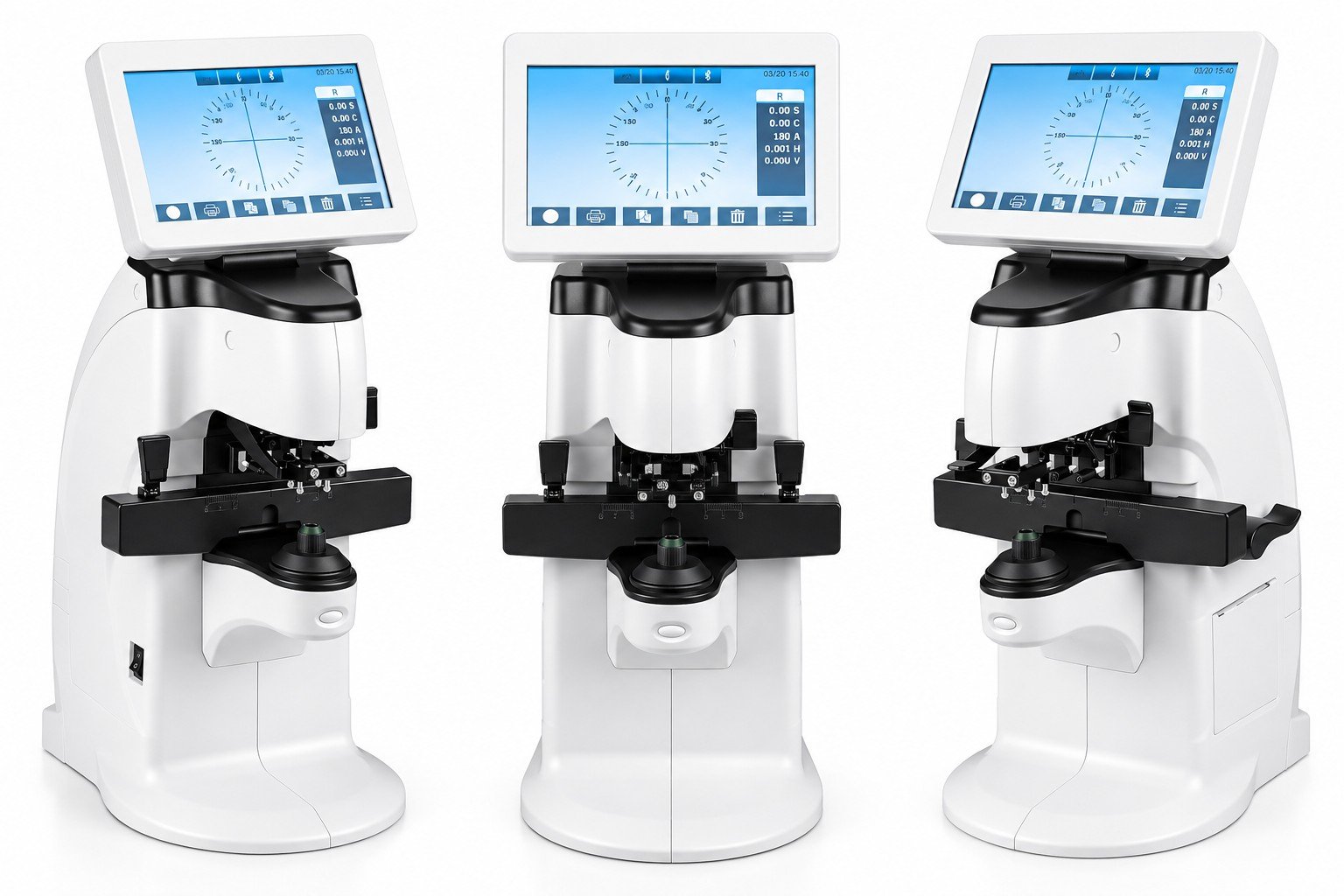
HV-600 Auto lensmeter with 7-inch touch screen
A computer-controlled auto lensmeter with an automatic calibration program. Besides sphere, cylinder, axis, add and prism, it measures UV, blue-light and visible transmittance, measures pupillary distance and pupil height, and maps lens topography.
Delivery, packing and documents
What the HV-600 measures
Automatic readings
Computer-controlled, high-sensitivity optical path with an automatic calibration program that corrects minor measurement errors.
Lens recognition
Recognizes the lens automatically and measures various lens types, with a normal and a reverse-color display.
Transmittance test
Visible light, UV (400 nm) and blue light (425 nm) transmittance, useful for showing customers what a coating does.
Lens topography
A power map of the lens, shown on the 7-inch flip-up screen.
PD and pupil height
Virtual pupillary distance ruler with electronic PD and pupil height measurement.
Print and connect
Thermal printer; RS232 and Bluetooth (BLE and SPP dual mode) with a mobile app interface.
HV-600 in figures
Published specifications. Anything not listed here is confirmed in writing on your quotation, never estimated.
The built-in thermal printer is optional; we confirm it on your quotation.
Measurement
- Spherical power
- 0 to ±25.00 D
- Cylindrical power
- 0 to ±10.00 D
- Cylinder axis
- 0–180°, 1° steps
- Add power
- 0–10.00 D
- Prism power
- 0–10 Δ
- Diopter step
- 0.01 / 0.12 / 0.25 D
- Prism step
- 0.01 / 0.12 / 0.25 Δ
- Cylinder sign
- + / ± / −
- Prism notation
- X-Y / P-B
- Measurement speed
- 0.05 s
- Lens diameter
- 18–100 mm
Optics and hardware
- Light source
- 525 nm
- UV wavelength
- 400 nm
- Blue light wavelength
- 425 nm
- Screen
- 7", 1024 × 600, capacitive touch
- Printer
- Thermal printer
- Data connection
- RS232, Bluetooth BLE / SPP dual mode
- Dimensions
- 235 × 192 × 436 mm
- Weight
- 3.7 kg
- Power supply
- 110–240 V, 50–60 Hz
- Power rating
- 5 V, 6 A
Using an auto lensmeter well
How it works
A lensmeter measures the back vertex power of a spectacle lens (sphere, cylinder and axis), the add and any prism, and marks the optical center. An auto lensmeter passes a beam of light through the lens onto a sensor and calculates the power from how the lens bends the beam, so the reading does not depend on the operator’s eye.
In a shop it is used three times on every job: to verify incoming lenses, to find and mark the optical center before blocking, and to check the finished glasses before they go to the customer. The HV-600 adds transmittance readings at 400 nm (UV) and 425 nm (blue light), which you can show the customer on screen.
Transmittance readings describe how much light a lens lets through. They are not evidence of a health benefit; the UK College of Optometrists and a 2023 Cochrane review both caution against health claims for blue-light filtering lenses.
Check before you order
- Measuring ranges against your work: sphere to ±25 D, cylinder to ±10 D and prism to 10 Δ on the HV-600.
- Display steps you need (0.01, 0.12 or 0.25 D) and prism notation (x-y or polar).
- Printing and data: a thermal printer for job tickets, RS232 or Bluetooth for records.
- Lens sizes: 18–100 mm diameter.
- Extras you will actually use: UV and blue-light transmittance, PD and pupil height, lens topography.
Good practice
- Check the reading on a known lens at the start of the day.
- Clean the lens and seat it flat against the lens stop, back surface down; a tilted lens reads false cylinder.
- Let the instrument recognize the lens type and take the reading.
- For multifocals, read the distance zone first, then the near zone for the add.
- Mark the optical center before blocking.
- Compare the finished glasses with the prescription within your tolerance standard (ANSI Z80.1 in the US).
Care and maintenance
- Keep the nosepiece and lens stop clean; dust shifts readings.
- Replace printer paper and marking ink before they run out mid-job.
- Keep the screen clean with a dry, soft cloth.
Background sources: Lensometry (StatPearls, NCBI Bookshelf) · ANSI Z80.1 quick reference (The Vision Council) · College of Optometrists on blue-light filtering lenses (2023)
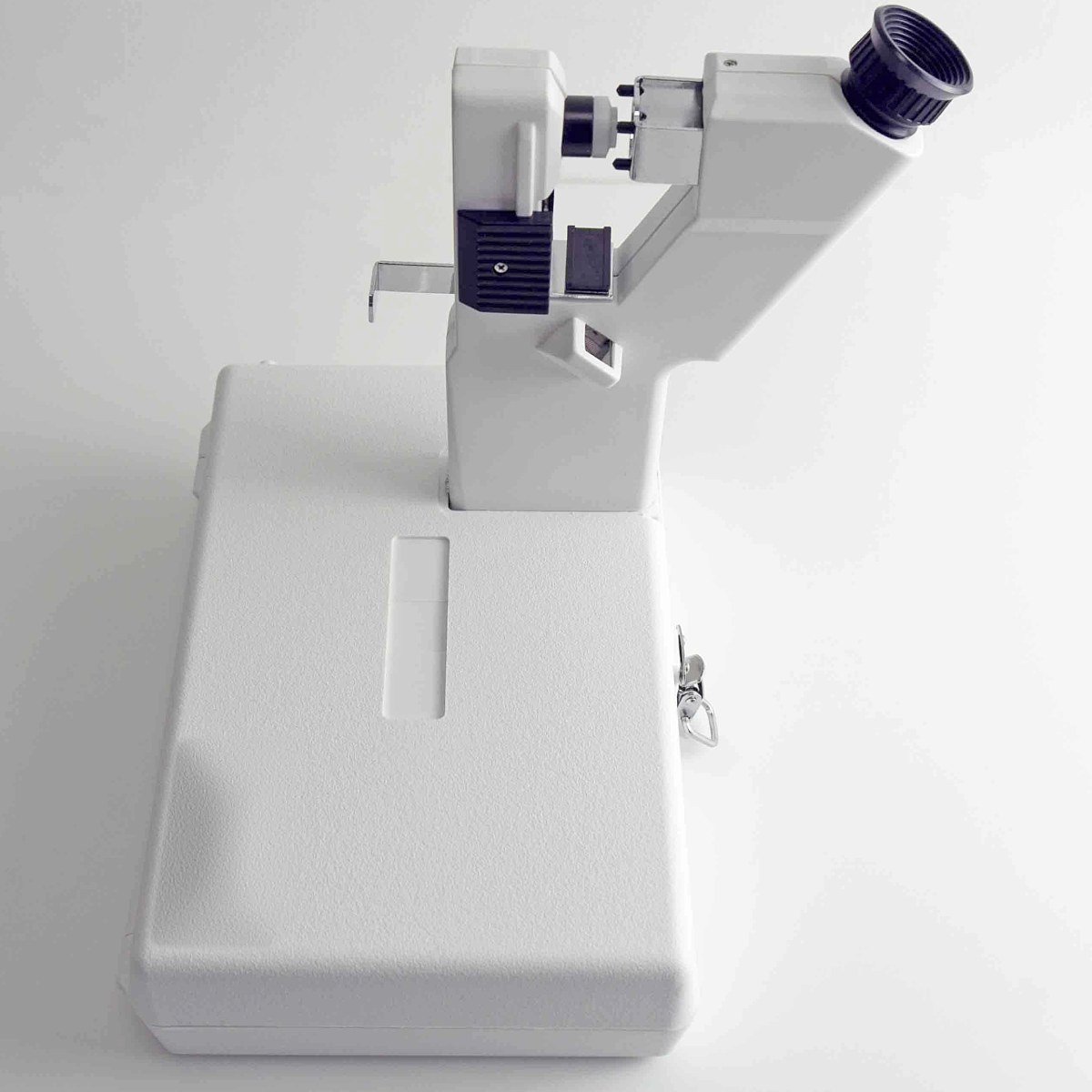
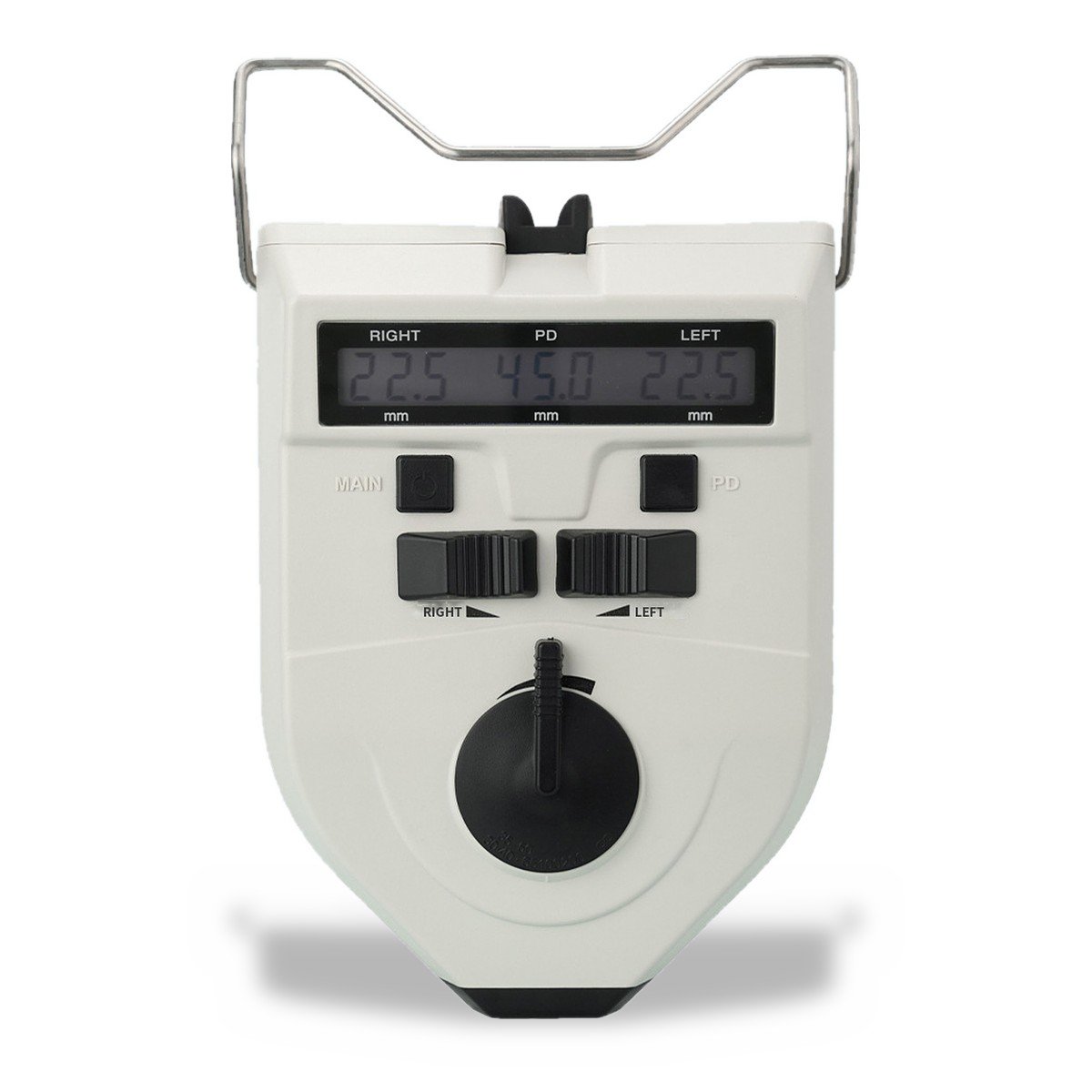
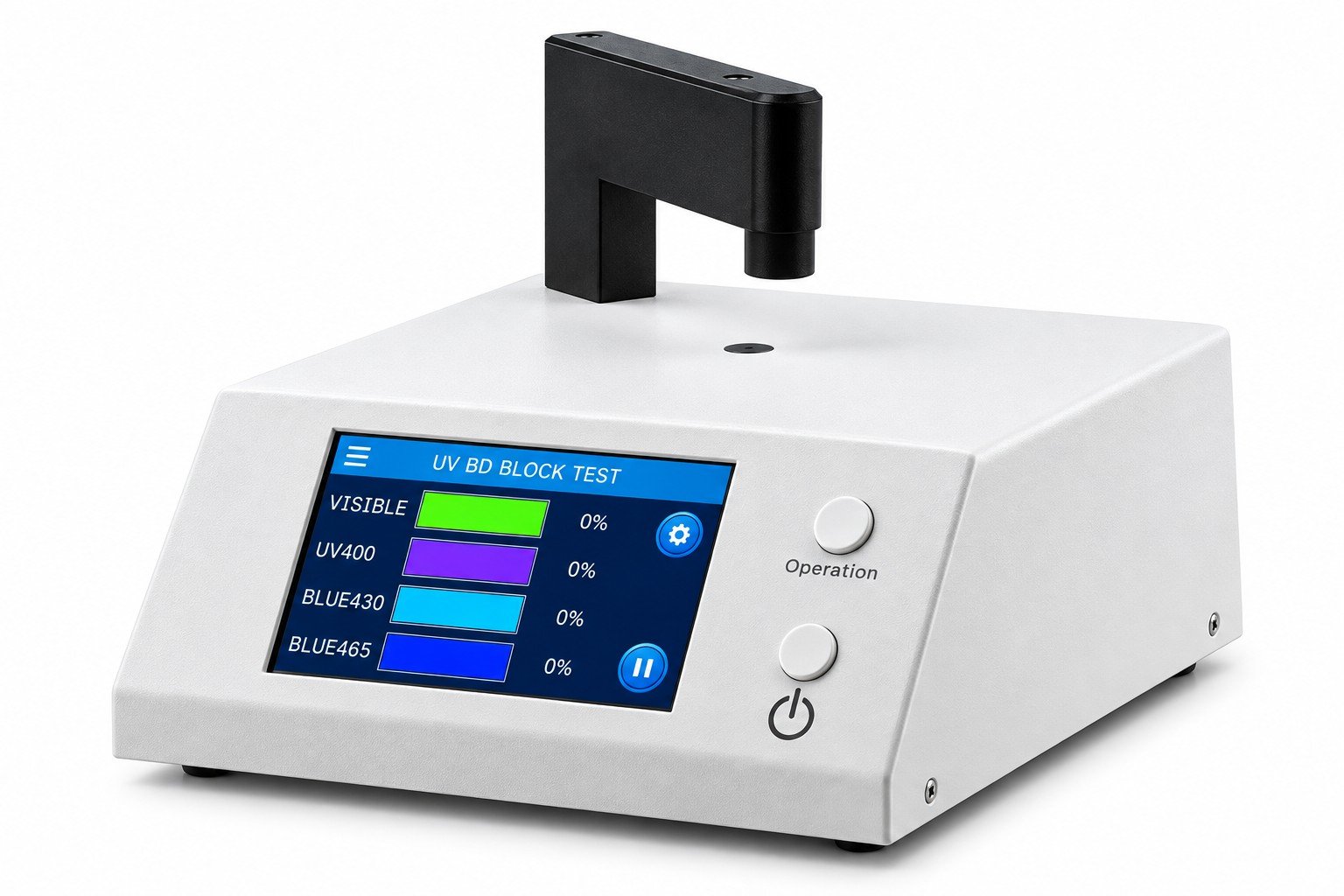
Often ordered with the HV-600
HV-600 questions
Is the thermal printer included?
The specification lists a thermal printer, and the product captions call the built-in printer optional. We confirm whether it is fitted on your quotation.
Which lenses can the HV-600 measure?
It recognizes the lens automatically and measures various lens types, from 18 to 100 mm in diameter, with sphere up to ±25.00 D, cylinder up to ±10.00 D and add up to 10.00 D.
Manual or automatic lensmeter: which suits my shop?
Both measure the same parameters. An automatic model reads faster, removes operator variation and adds transmittance, PD and printing; a manual model needs a trained eye but no electronics. Many shops keep a manual unit as a backup.
Can it show customers a lens’s UV and blue-light transmittance?
Yes. It measures visible, UV (400 nm) and blue light (425 nm) transmittance. Present the numbers as transmission, not as a health claim.